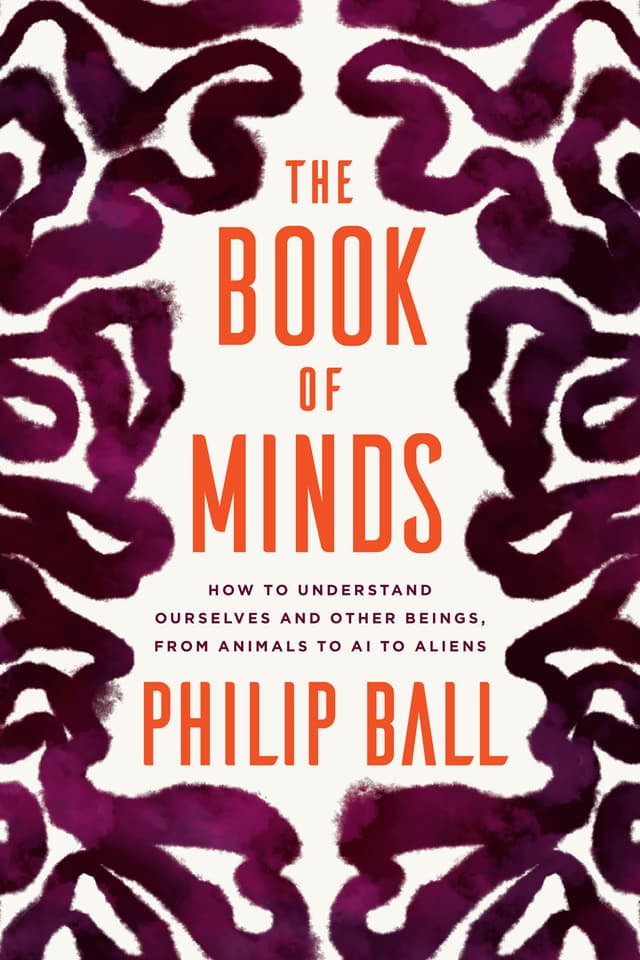
The Book of Minds: How to Understand Ourselves and Other Beings, from Animals to AI to Aliens
autor Philip Ball
O tej książce
Popular science writer Philip Ball explores a range of sciences to map our answers to a huge, philosophically rich How do we even begin to think about minds that are not human? Sciences from zoology to astrobiology, computer science to neuroscience, are seeking to understand minds in their own distinct disciplinary realms. Taking a uniquely broad view of minds and where to find them—including in plants, aliens, and God—Philip Ball pulls the pieces together to explore what sorts of minds we might expect to find in the universe. In so doing, he offers for the first time a unified way of thinking about what minds are and what they can do, by locating them in what he calls the “space of possible minds.” By identifying and mapping out properties of mind without prioritizing the human, Ball sheds new light on a host of fascinating What moral rights should we afford animals, and can we understand their thoughts? Should we worry that AI is going to take over society? If there are intelligent aliens out there, how could we communicate with them? Should we? Understanding the space of possible minds also reveals ways of making advances in understanding some of the most challenging questions in contemporary What is thought? What is consciousness? And what (if anything) is free will?Informed by conversations with leading researchers, Ball’s brilliant survey of current views about the nature and existence of minds is more mind-expanding than we could imagine. In this fascinating panorama of other minds, we come to better know our own.
Gdzie kupić
Brak dostępnych opcji zakupu.
Linki w tej sekcji są linkami afiliacyjnymi - jeśli po kliknięciu kupisz książkę, otrzymamy prowizję od sklepu. Cena dla Ciebie pozostaje taka sama.
Więcej od Philip Ball

Beyond Weird
Philip Ball
Bright Earth: Art and the Invention of Color
Philip Ball

Masa krytyczna. Jak jedno z drugiego wynika
Philip Ball
Curiosity: How Science Became Interested in Everything
Philip Ball

Flow: Nature's Patterns: A Tapestry in Three Parts
Philip Ball
How to Grow a Human: Adventures in Who We Are and How We Are Made
Philip Ball

Invisible: The Dangerous Allure of the Unseen
Philip Ball
Life's Matrix: A Biography of Water
Philip Ball
Patterns in Nature: Why the Natural World Looks the Way It Does
Philip Ball

Krótka historia geniuszy
Neal Stephenson, Richard Dawkins, Margaret Atwood, Gregory Benford, Ian Stewart, James Gleick, Paul C.W. Davies, Oliver Morton, Bill Bryson, Rebecca Goldstein, Henry Petroski, Simon Schaffer, Stephen H. Schneider, Philip Ball, Martin J. Rees, John D. Barrow, Richard Fortey, Margaret Wertheim, Maggie Gee, Georgina Ferrey
Shapes: Nature's Patterns: A Tapestry in Three Parts
Philip Ball

The Modern Myths: Adventures in the Machinery of the Popular Imagination
Philip Ball