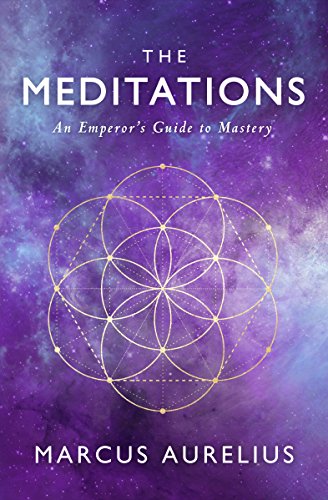
The Meditations: An Emperor's Guide to Mastery
by Marcus Aurelius, Sam Torode
- Tytuł oryginalny
- Atomic Habits
- Język oryginału
- Angielski
- Liczba stron
- 320
- Wydawnictwo
- Avery
O tej książce
How to think clearly, act purposefully, overcome obstacles, and find peace & happiness along the way. Marcus Aurelius (121-180 CE) was one of the few true philosopher-kings in history.His father died when Marcus was three. At age fifteen, he was adopted by his aunt's husband, the future Emperor Antoninus Pius, putting him in the line of succession. At forty, he became a reluctant emperor of the Roman Empire.Marcus was conflicted because the demands of being emperor--on top of the temptations of wealth and power--seemed incompatible with his true to be a humble student of philosophy.Over time, though, he worked out a practical philosophy that kept him grounded amidst the stresses and excesses of palace life. That's why his philosophy is so relevant to us today, in the modern world. How did he fare as emperor? During his twenty years of service, Marcus earned the love of the people and the loyalty of the senate. Later historians called him "the last of the five good emperors."In spare moments, Marcus wrote the journal entries collected in The Meditations . They were not intended for publication, but to remind Marcus himself of his principles and priorities. As a result, they are intimate, direct, and extremely useful.This new edition of The Meditations is an interpretive paraphrase in contemporary English, with a foreword, by bestselling author Sam Torode. (It’s based on the 1862 translation by George Long.) A companion volume, The Manual of Epictetus, is also available from Ancient Renewal.
Więcej od Marcus Aurelius
100 Masterpieces of World Literature: 1984, On the Road, The Old Man and the Sea, Pride and Prejudice, Mrs. Dalloway, Moby-Dick, Ulysses, Frankenstein, The Chronicles of Narnia
Marcus Aurelius, F. Scott Fitzgerald, Leo Tolstoy, Fyodor Dostoevsky, George Orwell, Jonathan Swift, Sun Tzu, Niccolò Machiavelli, Lao Tzu, Erich Maria Remarque, Aldous Huxley, Ernest Hemingway, Robert Louis Stevenson, Charles Dickens, John Steinbeck, Lewis Carroll, Edith Wharton, George Eliot, Gustave Flaubert, James Joyce, Thomas Hardy, Albert Camus, Franz Kafka, William Faulkner, Jack London, Oscar Wilde, Nathaniel Hawthorne, Harriet Beecher Stowe, Louisa May Alcott, Mark Twain, John Milton, Kenneth Grahame, Nikolai Gogol, L. Frank Baum, Anne Brontë, Arthur Conan Doyle, Rudyard Kipling, William Makepeace Thackeray, Jane Austen, Johann Wolfgang von Goethe, Virginia Woolf, Ford Madox Ford, Joseph Conrad, Victor Hugo, D.H. Lawrence, Jules Verne, H.G. Wells, C.S. Lewis, L.M. Montgomery, Walt Whitman, Emily Brontë, Virgil, Ivan Turgenev, Stendhal, Raymond Chandler, Homer, Sylvia Plath, Herman Melville, T.S. Eliot, Carson McCullers, Richard Wright, Kate Chopin, Alexandre Dumas, Bram Stoker, Marcel Proust, Margaret Mitchell, Dante Alighieri, Henrik Ibsen, Sophocles, Daniel Defoe, E.M. Forster, Frances Hodgson Burnett, Charlotte Brontë, Plato, Miguel de Cervantes Saavedra, Wilkie Collins, Thomas Mann, Dashiell Hammett, Jack Kerouac, Mary Wollstonecraft Shelley, Friedrich Nietzsche, Evelyn Waugh, Malcolm Lowry, Neale Hurston
365 Stoic Reflections
Marcus Aurelius
Best Quotations of Marcus Aurelius
Marcus Aurelius
Cammino verso la libertà interiore
Marcus Aurelius