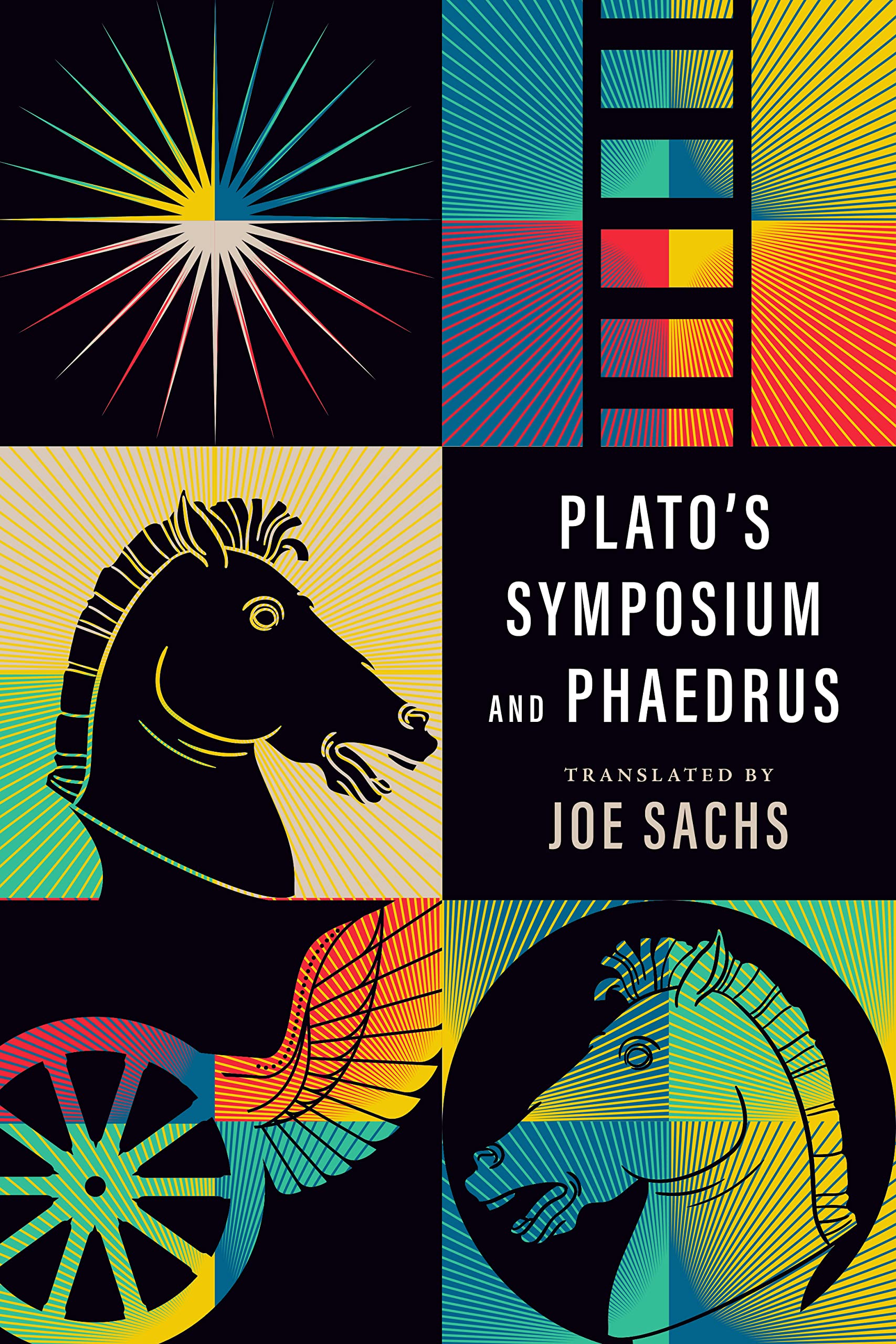
Plato's Symposium and Phaedrus
by Plato
- Tytuł oryginalny
- Atomic Habits
- Język oryginału
- Angielski
- Liczba stron
- 320
- Wydawnictwo
- Avery
O tej książce
"Joe Sachs is a national treasure. His brilliant translations from the Greek, spanning works from Homer to Aristotle, have long enriched scholars and students alike. He crowns those achievements with this exquisite rendering of two of Plato’s most beautiful dialogues, with an introduction that evidences his deft ability to drill down to 'the thing itself.'"—Thomas Sheehan, Professor Emeritus of Religious Studies, Stanford UniversityThe Phaedrus and Symposium are Plato’s two dialogues about Eros—that is, desirous longing. In these new translations by former St. John’s College tutor Joe Sachs, the reader imaginatively becomes a member, if a silent one, of the conversations Socrates has with his companions.While both dialogues are about love, they differ in intriguing and important ways. The conversation of the Phaedrus takes place in the countryside and that of the Symposium in Athens. In the Phaedrus only Socrates and Phaedrus are present; in the Symposium many participate in the drinking party. But in both, Socrates presents singularly abiding The winged horses and chariot in the Phaedrus; the ladder of love in the Symposium. These compelling images attract and move the reader to ask questions of the dialogues, which in their unique ways seem to reply. The interplay of the two texts may spark an unfolding in the reader’s thinking about love, The context for our thinking includes in one case the subject of tragedy and comedy, in the other the nature of rhetoric and writing, but it is philosophy, and not poetry or politics, that persistently claims the center of attention. The dialogues themselves seem as different as night from day, as urbane wit from rustic charm—but do they point to opposing or converging attitudes toward erotic love?
Więcej od Plato
100 Masterpieces of World Literature: 1984, On the Road, The Old Man and the Sea, Pride and Prejudice, Mrs. Dalloway, Moby-Dick, Ulysses, Frankenstein, The Chronicles of Narnia
Marcus Aurelius, F. Scott Fitzgerald, Leo Tolstoy, Fyodor Dostoevsky, George Orwell, Jonathan Swift, Sun Tzu, Niccolò Machiavelli, Lao Tzu, Erich Maria Remarque, Aldous Huxley, Ernest Hemingway, Robert Louis Stevenson, Charles Dickens, John Steinbeck, Lewis Carroll, Edith Wharton, George Eliot, Gustave Flaubert, James Joyce, Thomas Hardy, Albert Camus, Franz Kafka, William Faulkner, Jack London, Oscar Wilde, Nathaniel Hawthorne, Harriet Beecher Stowe, Louisa May Alcott, Mark Twain, John Milton, Kenneth Grahame, Nikolai Gogol, L. Frank Baum, Anne Brontë, Arthur Conan Doyle, Rudyard Kipling, William Makepeace Thackeray, Jane Austen, Johann Wolfgang von Goethe, Virginia Woolf, Ford Madox Ford, Joseph Conrad, Victor Hugo, D.H. Lawrence, Jules Verne, H.G. Wells, C.S. Lewis, L.M. Montgomery, Walt Whitman, Emily Brontë, Virgil, Ivan Turgenev, Stendhal, Raymond Chandler, Homer, Sylvia Plath, Herman Melville, T.S. Eliot, Carson McCullers, Richard Wright, Kate Chopin, Alexandre Dumas, Bram Stoker, Marcel Proust, Margaret Mitchell, Dante Alighieri, Henrik Ibsen, Sophocles, Daniel Defoe, E.M. Forster, Frances Hodgson Burnett, Charlotte Brontë, Plato, Miguel de Cervantes Saavedra, Wilkie Collins, Thomas Mann, Dashiell Hammett, Jack Kerouac, Mary Wollstonecraft Shelley, Friedrich Nietzsche, Evelyn Waugh, Malcolm Lowry, Neale Hurston
A Plato Reader: Eight Essential Dialogues
Plato
Alcibiades
Plato
Alcibiades I
Plato