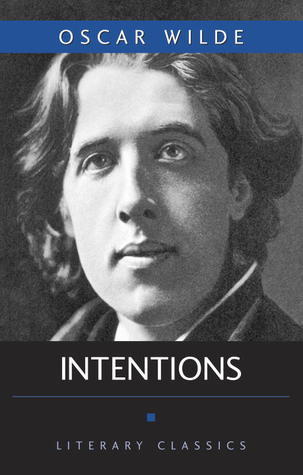
Intentions
by Oscar Wilde, Percival Pollard
- Tytuł oryginalny
- Atomic Habits
- Język oryginału
- Angielski
- Liczba stron
- 320
- Wydawnictwo
- Avery
O tej książce
Originally published in 1891 when Wilde was at the height of his form, these brilliant essays on art, literature, criticism, and society display the flamboyant poseur’s famous wit and wide learning. A leading spokesman for the English Aesthetic movement, Wilde promoted "art for art’s sake" against critics who argued that art must serve a moral purpose. On every page of this collection the gifted literary stylist admirably demonstrates not only that the characteristics of art are "distinction, charm, beauty, and imaginative power," but also that criticism itself can be raised to an art form possessing these very qualities.In the opening essay, Wilde laments the "decay of Lying as an art, a science, and a social pleasure." He takes to task modern literary realists like Henry James and Emile Zola for their "monstrous worship of facts" and stifling of the imagination. What makes art wonderful, he says, is that it is "absolutely indifferent to fact, [art] invents, imagines, dreams, and keeps between herself and reality the impenetrable barrier of beautiful style, of decorative or ideal treatment."The next essay, "Pen, Pencil, and Poison," is a fascinating literary appreciation of the life of Thomas Griffiths Wainewright, a talented painter, art critic, antiquarian, friend of Charles Lamb, and — murderer.The heart of the collection is the long two-part essay titled "The Critic as Artist." In one memorable passage after another, Wilde goes to great lengths to show that the critic is every bit as much an artist as the artist himself, in some cases more so. A good critic is like a virtuoso interpreter: "When Rubinstein plays … he gives us not merely Beethoven, but also himself, and so gives us Beethoven absolutely…made vivid and wonderful to us by a new and intense personality. When a great actor plays Shakespeare we have the same experience."Finally, in "The Truth of Masks," Wilde returns to the theme of art as artifice and creative deception. This essay focuses on the use of masks, disguises, and costume in Shakespeare.For newcomers to Wilde and those who already know his famous plays and fiction, this superb collection of his criticism offers many delights.The introduction is by Percival Pollard New York, July, 1905.
Więcej od Oscar Wilde
Mysterious Obsession: Memoirs of a Compulsive Collector
Charles Dickens, Graham Greene, Otto Penzler, Raymond Chandler, John D. MacDonald, Georges Simenon, Anna Katharine Green, Wilkie Collins, Gertrude Stein, Dashiell Hammett, Leslie Charteris, C. Daly King, Gaston Leroux, Percival Pollard, Earl Derr Biggers, J.S. Fletcher, Fergus Hume, S.S. Van Dine, Arthur B. Reeve, Clayton Rawson, Frederick Irving Anderson, M.P. Shiel, Francoise-Eugene Vidocq
100 Eternal Masterpieces of Literature [volume 2]
Leo Tolstoy, Jonathan Swift, Robert Louis Stevenson, W. Somerset Maugham, James Joyce, Edgar Allan Poe, Jack London, Oscar Wilde, Mark Twain, H.P. Lovecraft, Walter Scott, Rudyard Kipling, D.H. Lawrence, Jules Verne, H.G. Wells, Rabindranath Tagore, Stendhal, Herman Melville, Rebecca West, Bram Stoker, Marcel Proust, Thomas Mann, George Sand, Upton Sinclair, Mary Wollstonecraft Shelley
100 Masterpieces of World Literature: 1984, On the Road, The Old Man and the Sea, Pride and Prejudice, Mrs. Dalloway, Moby-Dick, Ulysses, Frankenstein, The Chronicles of Narnia
Marcus Aurelius, F. Scott Fitzgerald, Leo Tolstoy, Fyodor Dostoevsky, George Orwell, Jonathan Swift, Sun Tzu, Niccolò Machiavelli, Lao Tzu, Erich Maria Remarque, Aldous Huxley, Ernest Hemingway, Robert Louis Stevenson, Charles Dickens, John Steinbeck, Lewis Carroll, Edith Wharton, George Eliot, Gustave Flaubert, James Joyce, Thomas Hardy, Albert Camus, Franz Kafka, William Faulkner, Jack London, Oscar Wilde, Nathaniel Hawthorne, Harriet Beecher Stowe, Louisa May Alcott, Mark Twain, John Milton, Kenneth Grahame, Nikolai Gogol, L. Frank Baum, Anne Brontë, Arthur Conan Doyle, Rudyard Kipling, William Makepeace Thackeray, Jane Austen, Johann Wolfgang von Goethe, Virginia Woolf, Ford Madox Ford, Joseph Conrad, Victor Hugo, D.H. Lawrence, Jules Verne, H.G. Wells, C.S. Lewis, L.M. Montgomery, Walt Whitman, Emily Brontë, Virgil, Ivan Turgenev, Stendhal, Raymond Chandler, Homer, Sylvia Plath, Herman Melville, T.S. Eliot, Carson McCullers, Richard Wright, Kate Chopin, Alexandre Dumas, Bram Stoker, Marcel Proust, Margaret Mitchell, Dante Alighieri, Henrik Ibsen, Sophocles, Daniel Defoe, E.M. Forster, Frances Hodgson Burnett, Charlotte Brontë, Plato, Miguel de Cervantes Saavedra, Wilkie Collins, Thomas Mann, Dashiell Hammett, Jack Kerouac, Mary Wollstonecraft Shelley, Friedrich Nietzsche, Evelyn Waugh, Malcolm Lowry, Neale Hurston
30 Eternal Masterpieces of Humorous Stories
Jonathan Swift, Aldous Huxley, Edwin A. Abbott, Charles Dickens, Lewis Carroll, George Eliot, Oscar Wilde, Saki, Mark Twain, O. Henry, Jane Austen, G.K. Chesterton, P.G. Wodehouse, H.G. Wells, Jerome K. Jerome, Robert Barr, Samuel Butler, Frank R. Stockton, John Kendrick Bangs, Christopher Morley, James Branch Cabell, Sinclair Lewis, Ernest Bramah, Natsume Sōseki, Edna Ferber, Earl Derr Biggers, Gelett Burgess, Wardon Allan Curtis, George Tucker