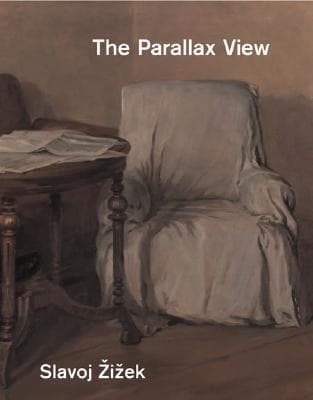
The Parallax View
autor Slavoj Žižek
O tej książce
The Parallax View is Slavoj Zizek's most substantial theoretical work to appear in many years; Zizek himself describes it as his magnum opus. Parallax can be defined as the apparent displacement of an object, caused by a change in observational position. Zizek is interested in the "parallax gap" separating two points between which no synthesis or mediation is possible, linked by an "impossible short circuit" of levels that can never meet. From this consideration of parallax, Zizek begins a rehabilitation of dialectical materialism.Modes of parallax can be seen in different domains of today's theory, from the wave-particle duality in quantum physics to the parallax of the unconscious in Freudian psychoanalysis between interpretations of the formation of the unconscious and theories of drives. In The Parallax View, Zizek, with his usual astonishing erudition, focuses on three main modes of parallax: the ontological difference, the ultimate parallax that conditions our very access to reality; the scientific parallax, the irreducible gap between the phenomenal experience of reality and its scientific explanation, which reaches its apogee in today's brain sciences (according to which "nobody is home" in the skull, just stacks of brain meat--a condition Zizek calls "the unbearable lightness of being no one"); and the political parallax, the social antagonism that allows for no common ground. Between his discussions of these three modes, Zizek offers interludes that deal with more specific topics--including an ethical act in a novel by Henry James and anti-anti-Semitism.The Parallax View not only expands Zizek's Lacanian-Hegelian approach to new domains (notably cognitive brain sciences) but also provides the systematic exposition of the conceptual framework that underlies his entire work. Philosophical and theological analysis, detailed readings of literature, cinema, and music coexist with lively anecdotes and obscene jokes. This is Zizek at the height of his powers, both as a writer and a thinker.
Gdzie kupić
Brak dostępnych opcji zakupu.
Linki w tej sekcji są linkami afiliacyjnymi - jeśli po kliknięciu kupisz książkę, otrzymamy prowizję od sklepu. Cena dla Ciebie pozostaje taka sama.
Więcej od Slavoj Žižek

Contingency, Hegemony, Universality: Contemporary Dialogues on the Left
Slavoj Žižek, Judith Butler, Ernesto Laclau
Democracy in What State?
Slavoj Žižek, Jean-Luc Nancy, Giorgio Agamben, Alain Badiou, Kristin Ross, Wendy Brown, Jacques Rancière, Daniel Bensaïd
Did Somebody Say Totalitarianism?: Five Interventions in the (Mis)use of a Notion
Slavoj Žižek

Everything You Always Wanted to Know about Lacan
Fredric Jameson, Slavoj Žižek, Michel Chion, Renata Salecl, Mladen Dolar, Alenka Zupančič, Miran Božovič, Stojan Pelko, Pascal Bonitzer
For They Know Not What They Do: Enjoyment as a Political Factor
Slavoj Žižek

How to Read Lacan
Slavoj Žižek
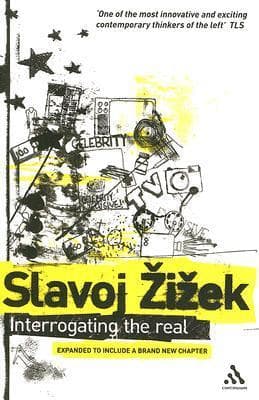
Interrogating the Real
Slavoj Žižek

Iraq: The Borrowed Kettle
Slavoj Žižek
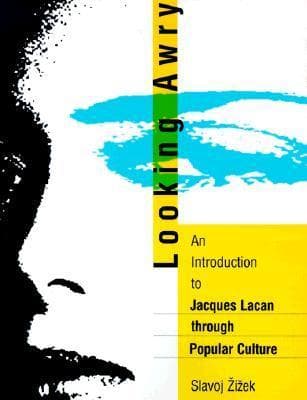
Looking Awry: An Introduction to Jacques Lacan through Popular Culture
Slavoj Žižek
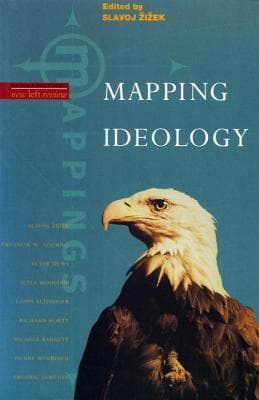
Mapping Ideology
Slavoj Žižek

The Art of the Ridiculous Sublime: On David Lynch's Lost Highway
Slavoj Žižek

Metastazy rozkoszy. Sześć esejów o kobietach i przyczynowości
Slavoj Žižek

The Monstrosity of Christ: Paradox or Dialectic?
Slavoj Žižek, John Milbank
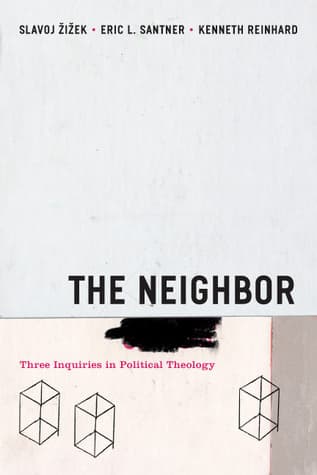
The Neighbor: Three Inquiries in Political Theology
Slavoj Žižek, Eric L. Santner, Kenneth Reinhard

The Puppet and the Dwarf: The Perverse Core of Christianity
Slavoj Žižek
Wzniosły obiekt ideologii
Slavoj Žižek
The Ticklish Subject: The Absent Centre of Political Ontology
Slavoj Žižek

Przemoc. Sześć spojrzeń z ukosa
Slavoj Žižek

Welcome to the Desert of the Real: Five Essays on September 11 and Related Dates
Slavoj Žižek