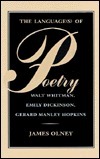
The Language(s) of Poetry : Walt Whitman, Emily Dickinson, Gerard Manley Hopkins
by James Olney
- Tytuł oryginalny
- Atomic Habits
- Język oryginału
- Angielski
- Liczba stron
- 320
- Wydawnictwo
- Avery
O tej książce
In this clear, succinct, and engaging book, noted critic James Olney explores the work of three seemingly disparate precursors of modernism - Whitman, Dickinson, and Hopkins - and establishes a set of criteria by which any reader might judge and better appreciate a poem.Considering the language of the poets' times, their unique ways with language, and what he calls the "nearly ahistorical language" of poetry, Olney arrives at three properties that form a kind of common ground in poetry, regardless of the cultural context or the era in which the poem was written. These properties are a heightened rhythmization of language, an elevated figurativity of language, and a highly personal, distinctive eccentricity that shapes both the poetic vision and the technical means used to express it.In three chapters, each focusing on one of these properties, Olney shows how the poets shaped these elements in their own distinctive ways. "Dickinsonian" verse, he notes, displays a metrical regularity reminiscent of hymns. It is also a thoroughly metaphorical poetry that works through figures of similarity and resemblance, and it reveals an unmistakable economy as well as a "darting, quicksilver" elusiveness. Whitman's highly rhythmic, but entirely nonmetrical, poetry is dominated by figures of correlation and connection. His verse, pervaded by an insatiate desire to annex the human world and universe to himself, has a sense of being neverending. Hopkins's poems are markedly rhythmic and even metrical, but not according to any traditional or inherited system of metrics. Figuratively mixed, they are highly wrought poems that observe the strictest formalities in order to subjugate unruly and explosive emotions. Throughout his discussions, Olney quotes extensively from the poetry of all three figures and also conveys much about the effect of their personal lives on their work.In plain terms that neither obfuscate nor overshadow his subjects, Olney helps us to understand better the ways in which poets defamiliarize our world and make us see it anew.
Więcej od James Olney
Afro-American Writing Today: An Anniversary Issue of the Southern Review
James Olney
Autobiography: Essays Theoretical and Critical
James Olney
Behind the Scenes: Or, Thirty Years a Slave, and Four Years in the White House
Elizabeth Keckley
Daedalus 143:1 (Winter 2014) - What Humanists Do
J. Hillis Miller, Scott Russell Sanders, Rachel Bowlby, James Olney, Gillian Beer, Ross Posnock, Francis Oakley, Karla F.C. Holloway, Patricia Meyer Spacks