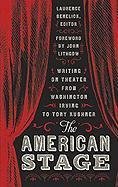
The American Stage: Writing on Theater from Washington Irving to Tony Kushner
by Tony Kushner, Wendy Wasserstein, Susan Sontag, Edgar Allan Poe, Thomas M. Disch, Mark Twain, Willa Cather, Washington Irving, Henry Louis Gates Jr., Walt Whitman, Henry James, Thomas Wolfe, Dorothy Parker, Tennessee Williams, Gore Vidal, Langston Hughes, Ring Lardner, Eric Bentley, Frank Rich, Elizabeth Hardwick, Alexis de Tocqueville, Ezra Pound, Charles Sprague, Hutchins Hapgood, Alexander Woollcott, Robert Benchley, Mary McCarthy, John Simon, Charles Ludlam, Anne Bogart, Frances Milton Trollope, Luis Valdez, Alan Dale, Stark Young, Harold Clurman, Spalding Gray, William Winter, William Gillette, Djuna Barnes, Elia Kazan, Walter Kerr, Edward Albee, David Mamet, Edmund Wilson, Arthur Miller, William Goldman, John Lithgow, Edward P. Hingston, James Huneker, Don Marquis, Hallie Flanagan, Fred Allen, Lottie Blair Parker, Channing Pollock, John Houseman, Philip Hone, Gilbert Seldes, Brooks Atkinson, Laurence Senelick, Anna Cora Mowatt, Olive Logan, Carl van Vechten, George Jean Nathan, William Dunlap, Rollin Lynde Hartt, Ludwig Lewisohn, Alain LeRoy Locke, Thornton Wilder, Frances Parkinson Keyes, Lorraine Hansberry, Hamlin Garland, S.J. Perelman, John Mason Brown, Charles L. Mee Jr., Charles King Newcomb, Lee Simonson, Sidney Skolsky, Morton Eustis, John Lahr, Ed Bullins
- Tytuł oryginalny
- Atomic Habits
- Język oryginału
- Angielski
- Liczba stron
- 320
- Wydawnictwo
- Avery
O tej książce
Here is the story, told firsthand through electric, deeply engaged writing, of America’s living theater, high and low, mainstream and experimental. Drawing on history, criticism, memoir, fiction, poetry, and parody, editor Laurence Senelick presents writers with the special knack “to distill both the immediate experience and the recollected impression, to draw the reader into the charmed circle and conjure up what has already vanished.” Through the words of playwrights and critics, actors and directors, and others behind the footlights, the entertainments and high artistic strivings of successive eras come vividly, sometimes tumultuously, to life.Observers from Washington Irving and Fanny Trollope to Walt Whitman and Mark Twain evoke the world of the nineteenth-century playhouse in all its raucous vitality. Henry James confesses his early enthusiasm for playgoing; Willa Cather reviews provincial productions of Uncle Tom’s Cabin and Antony and Cleopatra. The increasing diversity and ambition of the American theater is reflected in Hutchins Hapgood’s account of New York’s Yiddish theaters at the turn of the century, Carl Van Vechten’s review of the Sicilian actress Mimi Aguglia, Alain Locke’s comments on the emerging African-American theater in the 1920s, and Ezra Pound’s response to James Joyce’s play Exiles and theatrical modernism. Enthusiasts for the New Stagecraft, such as Lee Simonson and Djuna Barnes, are matched by champions of pop culture such as Gilbert Seldes and Fred Allen. S. J. Perelman lampoons Clifford Odets; Edmund Wilson acclaims Minsky’s Burlesque; Harold Clurman explains Stanislavski’s Method; Gore Vidal dissects the compromises of commercial playwriting. A host of playwrights—among them Thornton Wilder, Arthur Miller, Tennessee Williams, Lorraine Hansberry, Edward Albee, Wendy Wasserstein, David Mamet, and Tony Kushner—are joined by such renowned critics as Stark Young, George Jean Nathan, Brooks Atkinson, and Eric Bentley.