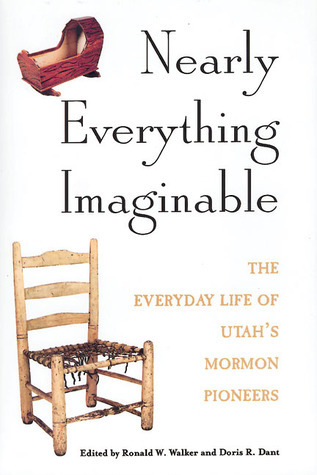
Nearly Everything Imaginable: The Everyday Life of Utah's Mormon Pioneers
- Tytuł oryginalny
- Atomic Habits
- Język oryginału
- Angielski
- Liczba stron
- 320
- Wydawnictwo
- Avery
O tej książce
Ronald W. Walker and Doris R. Dant BYU Studies Mormon Studies From living in a dugout called the Castle of Spiders, or eating so many weeds that their skin took on a green cast, to losing four children in just a few weeks to diphtheria, nearly everything imaginable happened to the Mormon settlers of the Utah Territory. This book collects the details of the lives of the Mormon pioneers, explaining what they ate and wore, where they lived, how they worshipped, and, most importantly, how they endured the trials and tribulations of early Utah life.Hundreds of vignettes provide revealing looks into the everyday lives of these rugged settlers, lives that had their moments of joy and celebration as well as struggle."Old and young would gather for dancing; everybody came early and left about the midnight hour. The bedrooms opening from the hall were generally filled with babies snugly tucked away, while the mothers enjoyed the dance. The huge fireplaces at either end of the hall were piled high with dry cedar fagots, the flames from which leaped and danced up the chimneys. Candles held in place by three nails driven into wooden brackets were ranged high along the walls. Tickets were paid for in any kind of produce that the fiddlers could be induced to accept. Usually a couple of two-bushel sacks could be seen near the door, into which the dancers deposited their contributions."Distributed for BYU Studies.
Więcej od Ronald W. Walker
BYU Studies #47:3
Ronald W. Walker
Great Basin Kingdom: An Economic History of the Latter-day Saints, 1830-1900
Leonard J. Arrington, Ronald W. Walker
Heroes, Hero Worship, and Brigham Young
Ronald W. Walker
Journal of Mormon History Spring 1993, Volume 19 No. 1
Ronald W. Walker, Laurel Thatcher Ulrich, Richard T. Hughes, Craig L. Foster, Patricia Lyn Scott, Frederick S. Buchanan