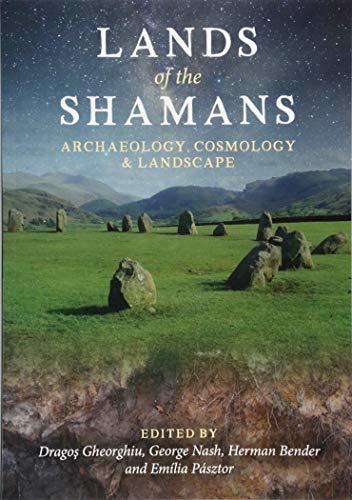
Lands of the Shamans: Archaeology, Cosmology and Landscape
- Tytuł oryginalny
- Atomic Habits
- Język oryginału
- Angielski
- Liczba stron
- 320
- Wydawnictwo
- Avery
O tej książce
‘Shamanism’ is a term with specific anthropological roots, but which is used more generally to cover a set of interactions between a practitioner or ‘shaman’ and a spiritual or religious realm beyond the reach of most members of the community. It has often been considered from an anthropological viewpoint, but this book gathers the most recent studies on a subject which has not been comprehensively studied by archaeologists. By putting together experts from two continents who have studied the phenomenon of shamanism, Lands of the Shamans, through carefully selected case studies, uses the archaeological evidence to construct the shamans’ worldview, landscape, and cosmology.Recent interdisciplinary studies support the idea of the existence of shamanistic representations as long ago as the Middle/Upper Palaeolithic, but at the same time, do not follow developments during the history of humankind. As ethnographic evidence shows, shamanistic activity represents a complex phenomenon that is extremely diversified, its spiritual activity possessing a large variety of expressions in the material culture. In other words, shamanism could be defined as a series of differing spiritual world views which model the material culture and the landscape.Throughout the archaeological record of all prehistoric and historic periods, there is a series of visual representations and objects, and landscape alterations that could be ascribed to these differing world views, many thought to represent shamanistic cognition and activity. The shaman’s landscape reveals itself to the world as one of multifaceted spiritual and material activity.Consequently, this first book dedicated completely to the shamanistic landscape presents in fresh perspective the landscapes of the lower and upper worlds as well as their phenomenological experience. Case Studies come from Europe, North America, and Asia.Table of ContentsContributors Towards a Landscape for ShamansThe Editors1. The Horse as a Shamanic Landscape The Distribution of Equus on Upper Palaeolithic Open-Air Rock Art Sites of the Iberian PeninsulaGeorge Nash and Sara Garcês2. Göbekli Tepe – A Shamanic LandscapeDragoş Gheorghiu3. Caves and the Sacral A Case Study on the Neolithic and Early Aeneolithic Periods in South-east Central EuropeVladimír Peša4. As Above, So St Melangell and the Celestial JourneyCaroline Malim5. Songs of the Shamans? Acoustical Studies in European PrehistoryChris Scarre6. Sights and Sounds of Selected Sacred and Shamanic LandscapesPaul Devereux7. Bronze Age Deposits in the Carpathian Basin – Markers for Spirit-Animated Landscape? The Role of Structured Deposition in Understanding the Worldview of Bronze Age EuropeEmília Pásztor8. Landscape Transformation and Continuity in Shamanic Rock Art of Northern AsiaEkaterina Devlet9. Shamans’ note sur la psychologie du shaman pre et protohistorique plus particulierement en EurasieMichel Louis Séfériadès10. The Mystery of the The Shaman Which Lévi-Strauss Did Not RecogniseEnrico Comba11. Bear Myths and The Moon and Mounds in North AmericaHerman Bender12. To Re-Enact Is to Envisioning a Shamanic Research Protocol in ArchaeologyApela Colorado and Ryan Hurd
Więcej od Dragos Gheorghiu
Archaeology of People and Territoriality
George Nash
Lands of the Shamans: Archaeology, Landscape and Cosmology
Dragos Gheorghiu
Place as Material Culture: Objects, Geographies and the Construction of Time
George Nash, Dragos Gheorghiu
The Archaeology of Fire: Understanding Fire as Material Culture
Dragos Gheorghiu