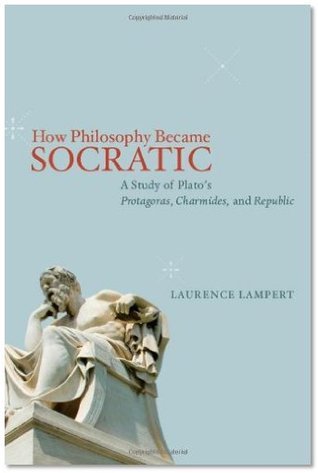
How Philosophy Became Socratic: A Study of Plato's "Protagoras," "Charmides," and "Republic"
- Tytuł oryginalny
- Atomic Habits
- Język oryginału
- Angielski
- Liczba stron
- 320
- Wydawnictwo
- Avery
O tej książce
Plato’s dialogues show Socrates at different ages, beginning when he was about nineteen and already deeply immersed in philosophy and ending with his execution five decades later. By presenting his model philosopher across a fifty-year span of his life, Plato leads his readers to wonder: does that time period correspond to the development of Socrates’ thought? In this magisterial investigation of the evolution of Socrates’ philosophy, Laurence Lampert answers in the affirmative.The chronological route that Plato maps for us, Lampert argues, reveals the enduring record of philosophy as it took the form that came to dominate the life of the mind in the West. The reader accompanies Socrates as he breaks with the century-old tradition of philosophy, turns to his own path, steadily enters into a deeper understanding of nature and human nature, and discovers the successful way to transmit his wisdom to the wider world. Focusing on the final and most prominent step in that process and offering detailed textual analysis of Plato’s Protagoras, Charmides, and Republic, How Philosophy Became Socratic charts Socrates’ gradual discovery of a proper politics to shelter and advance philosophy.
Więcej od Laurence Lampert
An Advertisement Touching a Holy War
Francis Bacon
Benardete, Seth. Plato's Symposium.(Book Review): An article from: The Review of Metaphysics
Laurence Lampert
Companion to Friedrich Nietzsche
Paul Bishop, Duncan Large, Keith Ansell-Pearson, Laurence Lampert, Carol Diethe, Ruth Abbey, Michael Gillespie, Martin Liebscher, Adrian Del Caro, Daniel Conway, Rebecca Bamford, Thomas Brobjer, Martine Prange, Alan Schrift
How Socrates Became Socrates: A Study of Plato’s “Phaedo,” “Parmenides,” and “Symposium”
Laurence Lampert