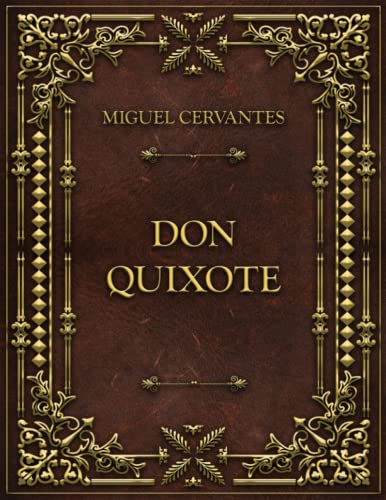
Don Quixote: Miguel Cervantes
by Miguel de Cervantes Saavedra, John Ormsby
- Tytuł oryginalny
- Atomic Habits
- Język oryginału
- Angielski
- Liczba stron
- 320
- Wydawnictwo
- Avery
O tej książce
Cervantes wrote that the first chapters were taken from "the archives of La Mancha", and the rest were translated from an Arabic text by the Moorish historian Cide Hamete Benengeli. This metafictional trick appears to give a greater credibility to the text, implying that Don Quixote is a real character and that this has been researched from the logs of the events that truly occurred several decades prior to the recording of this account and the work of magical sage historians that are known to be involved here (this getting some explaining). However, it was also common practice in that era for fictional works to make some creative pretense for seeming factual to the readers, such as the common opening line of fairy tales "Once upon a time in a land far away...".In the course of their travels, the protagonists meet innkeepers, prostitutes, goat-herders, soldiers, priests, escaped convicts and scorned lovers. The aforementioned characters sometimes tell tales that incorporate events from the real world. Their encounters are magnified by Don Quixote's imagination into chivalrous quests. Don Quixote's tendency to intervene violently in matters irrelevant to himself, and his habit of not paying debts, result in privations, injuries, and humiliations (with Sancho often the victim). Finally, Don Quixote is persuaded to return to his home village. The narrator hints that there was a third quest, saying that records of it have been lost, "...at any rate derived from authentic documents; tradition has merely preserved in the memory of La Mancha..." this third sally. A leaden box in possession of an old physician that was discovered at an old hermitage being rebuilt is related, containing "certain parchment manuscripts in Gothic character, but in Castilian verse" that seems to know the story even of Don Quixote's burial and having "sundry epitaphs and eulogies". The narrator requesting not much for the "vast toil which it has cost him in examining and searching the Manchegan archives" volunteers to present what can be made out of them with the good nature of "...and will be encouraged to seek out and produce other histories...". A group of Academicians from a village of La Mancha are set forth. The most worm-eaten were given to an Academician "to make out their meaning conjecturally." He's been informed he means to publish these in hopes of a third sally.
Więcej od Miguel de Cervantes Saavedra
Autumn Rambles in North Africa
John Ormsby
Daggers of the Third Reich: A Collector's Handbook. Volume 1
John Ormsby
Don Quixote (+Audiobook): With 3 More Masterful Classics
Gustave Flaubert, James Joyce, Herman Melville, Miguel de Cervantes Saavedra
Don Quixote (Summarized Edition): Enriched edition. Metafictional satire of chivalry in 17th-century Spain—knightly adventures, a loyal squire, social commentary on madness and identity
Miguel de Cervantes Saavedra, Scarlett Porter