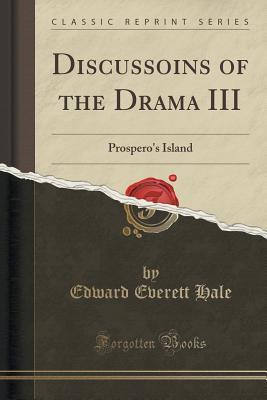
Discussoins of the Drama III: Prospero's Island
- Tytuł oryginalny
- Atomic Habits
- Język oryginału
- Angielski
- Liczba stron
- 320
- Wydawnictwo
- Avery
O tej książce
Excerpt from Discussoins of the Drama III: Prospero's IslandDuring the last three centuries there has grown up an immense literature solely con cerned with the play and the character of 'hamlet.' It is not merely that this 'ham let' literature makes of itself a respectable library; it has been stated by Professor lounsburyfi think, that there is a larger literature devoted to 'hamlet' than to any other man, whether fictitious or historical, ex cepting of course the founders of religions. Brandes says that the literature of Hamlet is larger than that of some of the smaller nationalities of Europe, the Slovak for exam ple. Before such evidence as this of the creative power of a great imagination one can only marvel silently and hold one's peace. And yet 'hamlet' is only one item in the vast Shaksperian literature. In varying degrees all the plays have gathered a literature about them, each one its own, ever growing largeras the years pass by. Among these plays other than 'hamlet' the 'tempest' is con spicuous in commentary and annotation. Mr. Furness, than whom there can be no higher authority, in his preface to the 'tempest' says that despite the unusual excellence of the text there is scarcely one of its five acts which does not contain a word or a phrase that has given rise to eager discussion; in one instance, the controversy assumes such ex tended proportions that in its presence even Juliet's 'runawaye's eyes may wink' 'and veil their lids in abashed inferiority. Mr. Furness then adds that certain it is that with the exception of 'hamlet' and 'julius Caesar' no play has been more liberally annotated than the 'tempest.' I confess that I was surprised to find that 'julius Caesar' came next to 'hamlet' in the amount of criticism, commentary and spec ulation which it had called forth. But it is entirely natural that notwithstanding its un usually excellent text the 'tempest' should be third on the list. There are abundant rea sons why this should be so. In the first place it is now generally accepted by those most competent to judge; indeed it may be saidthat it is now proved that the 'tempest was Shakspere's last play and in this final cre ation the genius of the master shone with undiminished luster. It also contains allu sions, like Prospero's breaking his wand, which the lovers of Shakspere have been pleased to fancy were related to the writer himself.About the PublisherForgotten Books publishes hundreds of thousands of rare and classic books. Find more at www.forgottenbooks.comThis book is a reproduction of an important historical work. Forgotten Books uses state-of-the-art technology to digitally reconstruct the work, preserving the original format whilst repairing imperfections present in the aged copy. In rare cases, an imperfection in the original, such as a blemish or missing page, may be replicated in our edition. We do, however, repair the vast majority of imperfections successfully; any imperfections that remain are intentionally left to preserve the state of such historical works.
Więcej od Edward Everett Hale
"Tell it again." Col. Clipsham's Calendar
Edward Everett Hale
A New England boyhood
Edward Everett Hale
A Summer Vacation: Four Sermons. pp. 1-71
Edward Everett Hale
An Anthology of Famous American Stories
F. Scott Fitzgerald, Ernest Hemingway, John Steinbeck, Erskine Caldwell, Irwin Shaw, William Saroyan, Edith Wharton, Edgar Allan Poe, William Faulkner, Jack London, Nathaniel Hawthorne, Mary Eleanor Wilkins Freeman, Mark Twain, Willa Cather, William Dean Howells, Washington Irving, O. Henry, Booth Tarkington, Ambrose Bierce, Gertrude Atherton, Henry James, Sherwood Anderson, Herman Melville, Wilbur Daniel Steele, Thomas Wolfe, Dorothy Parker, Stephen Crane, J.D. Salinger, John O'Hara, Sarah Orne Jewett, James Thurber, Eudora Welty, Bret Harte, Katherine Anne Porter, Ring Lardner, Susan Glaspell, Joel Chandler Harris, Frank R. Stockton, Richard Harding Davis, Dorothy Canfield Fisher, Christopher Morley, Katharine Brush, Gertrude Stein, James Branch Cabell, Walter Van Tilburg Clark, Fitz-James O'Brien, Budd Schulberg, Conrad Aiken, Hamlin Garland, Lafcadio Hearn, Thomas Bailey Aldrich, Theodore Dreiser, Frank Norris, Edna Ferber, Owen Johnson, John Dos Passos, Edward Everett Hale, Joseph Hergesheimer, George Ade, Thomas Beer, Angus Burrell, Thyra Samter Winslow, Harvey J. O'Higgins, Katharine F. Gerould