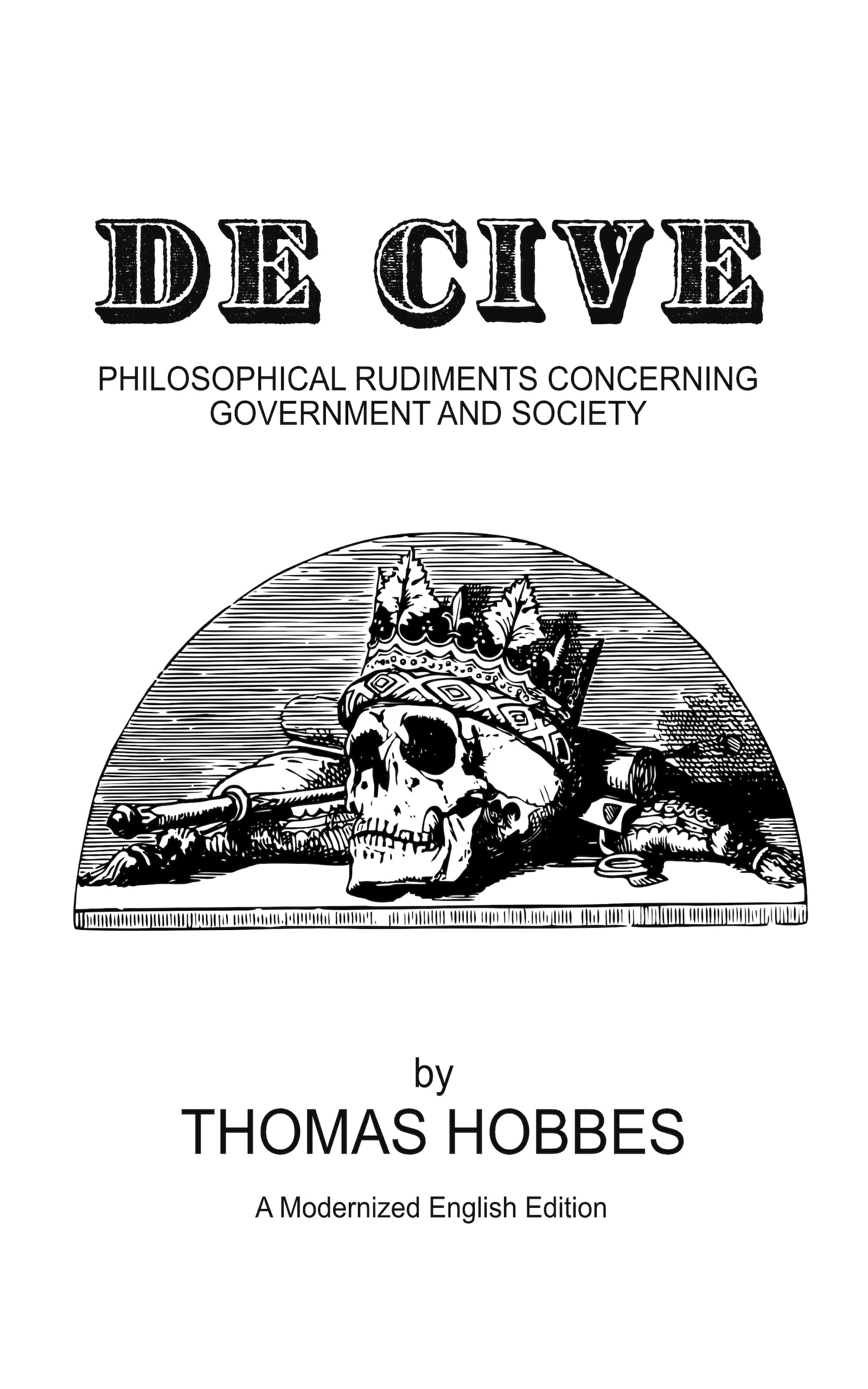
De Cive: Philosophical Rudiments Concerning Government and Society
- Tytuł oryginalny
- Atomic Habits
- Język oryginału
- Angielski
- Liczba stron
- 320
- Wydawnictwo
- Avery
O tej książce
Published in 1651, the subject matter of De Cive (the Citizen) is identical with that of his Leviathan (which was published the same year). The difference between the two lies in their format. De Cive is Hobbes' attempt to make explicit the deductions referred to in Leviathan. There is only one natural that everybody has the right to everything. And from this proposition, taking a cue from Euclid (as did Descartes), Hobbes deduces the structure of the state, outlining the power of the sovereign, and the place of his subjects, their duties, rights, and privileges. In this work he is more conscious to set out his premises and refers to previous chapters and articles to show his deductions.As in Leviathan, we see what Hobbes thought of the sovereign state which is formed by social contract to rescue humans from a perpetual state of war - it is a monster created by humans. But a necessary monster, without which the lifespan of a human in the resulting perpetual state of war is “nasty, brutish, and short.”This is a well-edited text (with modernized English) of Thomas Hobbes’ Philosophical Rudiments Concerning Government and Society, (more often referred to today as simply as De Cive) from The English Works of Thomas Hobbes, collected and edited by Sir William Molesworth, London, 1839.
Więcej od Thomas Hobbes
A Briefe of the Art of Rhetorique: Vol. 1 – 4 in 4
Thomas Hobbes
A Dialogue between a Philosopher and a Student of the Common Laws of England
Thomas Hobbes
An Historical Narration Concerning Heresie, and the Punishment Thereof
Thomas Hobbes
Behemoth: the history of the causes of the civil wars of England, and of the counsels and artifices by which they were carried on from the year 1640 to the year 1660
Thomas Hobbes