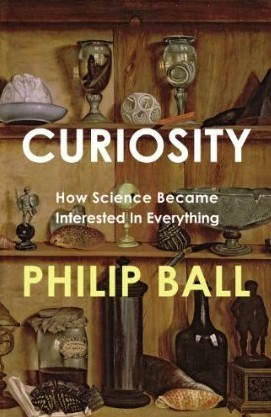
Curiosity: How Science Became Interested in Everything
by Philip Ball
- Tytuł oryginalny
- Atomic Habits
- Język oryginału
- Angielski
- Liczba stron
- 320
- Wydawnictwo
- Avery
O tej książce
There was a time when curiosity was condemned. To be curious was to delve into matters that didn't concern you - after all, the original sin stemmed from a desire for forbidden knowledge. Through curiosity our innocence was lost.Yet this hasn't deterred us. Today we spend vast sums trying to recreate the first instants of creation in particle accelerators, out of pure desire to know. There seems now to be no question too vast or too trivial to be ruled out of Why can fleas jump so high? What is gravity? What shape are clouds? Today curiosity is no longer reviled, but celebrated.Examining how our inquisitive impulse first became sanctioned, changing from a vice to a virtue, Curiosity begins with the age when modern science began, a time that spans the lives of Galileo and Isaac Newton. It reveals a complex story, in which the liberation - and the taming - of curiosity was linked to magic, religion, literature, travel, trade and empire.By examining the rise of curiosity, we can ask what has become of it how it functions in science, how it is spun and packaged and sold, how well it is being sustained and honoured, and how the changing shape of science influences the kinds of questions it may ask.
Więcej od Philip Ball
30-Second Physics: The 50 Most Fundamental Concepts In Physics, Each Explained In Half A Minute
Philip Ball, Brian Clegg, Steve Rawlings, Frank Close, Andrew May, Leon Clifford, Rhodri Evans
30-Second Quantum Theory: The 50 most important thought-provoking quantum concepts, each explained in half a minute
Philip Ball, Brian Clegg, Alexander Hellemans, Frank Close, Sharon Ann Holgate, Andrew May, Leon Clifford, Sophie Hebden
A Waste of Blood and Treasure: The 1799 Anglo-Russian Invasion of the Netherlands
Philip Ball
Active Killer Survival Manual - A Tactical Reload
Philip Ball, Dave Grossman, Liz Rasper