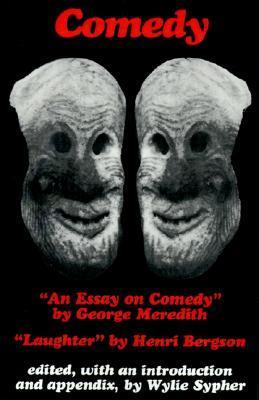
Comedy: "An Essay on Comedy" by George Meredith. "Laughter" by Henri Bergson
by Henri Bergson, George Meredith
- Tytuł oryginalny
- Atomic Habits
- Język oryginału
- Angielski
- Liczba stron
- 320
- Wydawnictwo
- Avery
O tej książce
Casting a critical eye on comic works throughout the ages, Meredith finds that the most skilled masters of the comic art―Aristophanes, Rabelais, Voltaire, Cervantes, Fielding, Molière―used comedy to grasp the essence of humanity. Comedy, according to Meredith's theory, serves an important moral and social it redeems us from our posturings, stripping away pride, arrogance, complacency, and other sins. Bergson's essay looks at comedy within a wider field of vision, focusing on laughter and on what makes us laugh. His study examines comic characters and comic acts, comedy in literature and in children's games, comedy as high art and base entertainment, to develop a psychological and philosophical theory of the mainsprings of comedy. Complementing the work of Meredith and Bergson in Wylie Sypher's appendix, as essay that discusses comedy and the underlying comic structure in both anthropological and literaty contexts. Sypher offers an enlightening discussion of the relationship between comedy and tragedy and their link with the ritual purging of evil from a society by means of a scapegoat. He then goes on to examine the guises of the comic hero in such figures as the Wife of Bath, Don Quixote, and Falstaff, relating them to such great tragic figures as Oedipus, Faust, and Hamlet. Through the many perspectives it offers, Comedy will appeal not only to students of literature and literary criticism, but to those studying philosophy and history as well.
Więcej od Henri Bergson
Classic Comedies (Signet classics) Lysistrata, The comedy of Errors, The Inspector General, The Misanthrope,Candida
Nikolai Gogol, Aristophanes, Molière, Henri Bergson, Plautus, Barbara Freedman, Shaw, FEYDEAU
Reader in Comedy: An Anthology of Theory and Criticism
Samuel Johnson, William Hazlitt, Mark Twain, William Makepeace Thackeray, Virginia Woolf, Ben Jonson, Søren Kierkegaard, Sigmund Freud, Luigi Pirandello, Charles Baudelaire, Dante Alighieri, John Dryden, Philip Sidney, Samuel Butler, Plato, Northrop Frye, Stanley Cavell, Aristotle, Molière, Henri Bergson, Simon Critchley, Horatius, Henry Jenkins, George Meredith, Jacques Derrida, George Bernard Shaw, Oliver Goldsmith, Georges Bataille, William Congreve, Erasmus, Immanuel Kant, Charles Lamb, Henry Fielding, René Girard, George Gascoigne, Nicholas Udall, Kenneth Burke, Jean Paul Friedrich Richter, Jeremy Collier, Gerald Mast, Aphra Behn, Evanthius, John Lydgate, Susanne K. Langer, Michael North, Mahadev L. Apte, Stephen Gosson, Linda Hutcheon, Battista Guarino, Richard Blackmore, Thomas Wilson, Anthony Ashley Cooper, Constance Rourke, John of Salisbury, Mikhail Bakhtin, Donatus, Pope Honorius III, Quintilian, John of Garland, Magda Romanska, Hrotsvita, Thomas Elyot, Liudprand of Cremona, Gian Giorgio Trissino, Glenda R. Carpio, Ruth Wisse
Reality
Marcel Proust, Plato, Aristotle, Henri Bergson, Georg Wilhelm Friedrich Hegel, Bertrand Russell, Augustine of Hippo, Parmenides, Empedocles, Immanuel Kant, John Locke, Edmund Husserl, Pythagoras, Thomas Aquinas, Ludwig Wittgenstein, Simone Weil, Arthur Stanley Eddington, René Descartes, David Hume, Heraclitus, George Berkeley, Baruch Spinoza, Ernst Mach, Gottfried Wilhelm Leibniz, Carl Levenson, Anaxagoras, Thales, Protagoras, Anaximander, Willard Van Orman Quine, J.L. Austin, Anaximenes
Time and Free Will
Henri Bergson