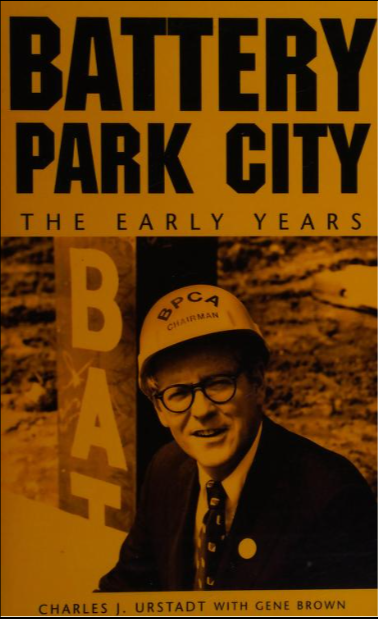
Battery Park City: The Early Years
by Gene Brown, Charles J. Urstadt
- Tytuł oryginalny
- Atomic Habits
- Język oryginału
- Angielski
- Liczba stron
- 320
- Wydawnictwo
- Avery
O tej książce
Battery Park City is a special place, and superlatives have come easily to those who have written about it. It is one of the most significant "new towns" ever built in America, constructed by private developers on landfill, with an infrastructure financed by the sale of bonds by a state-created public benefit corporation. Its successful mix of attractive office and residential buildings has been the major contributor to the revitalization of New York City’s downtown. It’s also paid off, literally. The Battery Park City Authority, the public benefit corporation that was the driving force behind the entire development, is in the black and, indeed, generates more than $100 million a year in profit without the City or State having a cent invested in the venture. The development is even rich culturally. It’s bookended on its south end by the Museum of Jewish Heritage, which has the most important collection memorializing the Holocaust outside of Washington, D.C.’s Holocaust Museum, and on the north by the new home of Stuyvesant High School, which most years sends more graduates to Harvard than any other high school in America. Amidst parks, sculpture, and apartments providing homes for almost 10,000 people—most of whom walk to work—stand the New York Mercantile Exchange and the imposing World Financial Center. Within shouting distance of young children on scooters and adolescents on skateboards are long town cars waiting to whisk executives to their next appointment. But if anything truly merits superlatives, it’s the public amenities that grace this "city" extending out into the water from lower Manhattan. On a summer Sunday, its long and graceful esplanade hosts thousands of bikers, hikers, and people out for a stroll along the Hudson River. The area is thronged at lunchtime, and after work on any pleasant afternoon, Battery Park City’s yacht cove is ringed with workers unwinding after a busy day, while its harborside restaurants are crowded with diners enjoying the spectacular view. The city’s financial powerhouses charter yachts with names such as "Royal Princess" and "Excalibur," anchored in the cove for business-promoting cocktail and dinner parties. But you don’t have to be rich or powerful to enjoy what the development has to offer. The indoor concerts under the high-arching crystal vault filled with palm trees and bright flowers, part of the World Financial Center just behind the cove, are free and open to the public. Imagine, as well, that this potential project, in the eyes of some, is meant to cure or stave off a series of economic and social problems as well as turn a profit—possibly conflicting aims that could infinitely complicate the task of even getting the land created. Conjure up such a project in which the engineering difficulties begin with the fact that the "land" on which it will be built is still submerged, the financing is a huge question mark, and the political, bureaucratic, and environmental obstructions that must be navigated are enough to make a pilot boat captain’s hands shake at the till.
Więcej od Gene Brown
Alaska To Asia
Gene Brown
An Alaskan Childhood: Growing up in Pre-Statehood Anchorage, Alaska
Gene Brown
Anne Frank: Child of the Holocaust
Gene Brown
Asano no Katana (Sword of Asano): An Historical Novel Spanning Five Hundred Years of Lord Suzuki's Family Ties to Asano Takumi-no Kami's Clan
Gene Brown