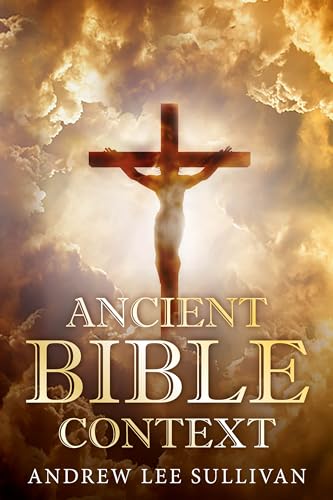
Ancient Bible Context
- Tytuł oryginalny
- Atomic Habits
- Język oryginału
- Angielski
- Liczba stron
- 320
- Wydawnictwo
- Avery
O tej książce
Without essential historical and cultural context, the Bible is not profoundly understood. Pertinent context reliably unveils a fundamental comprehension of any subject. Accordingly, the ancient context of the Bible reveals a treasure of understanding. If you want more out of your Bible, why not read about the history, culture, and early Christian praxis that surrounded its birth and development?If you want to grasp the Bible, Ancient Bible Context is an incomparable resource. Who wrote the Bible? When? Where? How? Why? What circumstances caused the oral Gospel to be written? How did it spread throughout the Roman Empire? Did the rapid diffusion of Christianity and appointment of bishops have any influence on the usage of the Bible? And what about the Roman persecutions and early heresies? Did these contribute to a canonization process that moved like a snail?Which scriptures did Jesus, the Apostles, and the early Church use? Why is this important to understand the Bible in your lap? Who removed seven books from the Old Testament? Why? Is there a link between the Last Supper and the early use of the Gospels and Paul’s letters? Is there a link between Jesus’s renaming of Simon at Caesarea Philippi and the canonization of the Bible in AD 382?Respected experts have shared wonderful discoveries of backbreaking contextual biblical research. So, what makes Ancient Bible Context different? Four things stand First, the presentation of the material is easily followed, at a tenth-grade reading level. This book is not by a scholar to scholars. It shuns the labored terminology of the initiated. It’s a historical and cultural narrative, sometimes conveying rudimentary explanations, sometimes brief stories. The approach shares complicated ideas in the language of the blue-collar believer who hungers for the big picture of the Bible.Second, the methodology of the book’s production is far less, or more, than a scholar’s strained “scientific method.” The methodology flows from the habit of intense prayer. Plainly Jesus asked the author to write this book. Further, Jesus urged the unsuitable author forward step by step, indicating the direction of the writing. Jesus inspired the themes and path of narration. Without a predetermined organization, for a long time, the author had no sense of what he was ultimately writing. Personal surrender, prayer, and God’s intent thoroughly shape the content of this book.Third, the conclusions of this book are pervasively Catholic. In contrast to Protestant biblical studies with Protestant conclusions, this book is by a Catholic with Catholic conclusions. The author discovers that the ancient context of the Bible substantiates Jesus Christ’s founding of the Catholic Church. Subsequently, that same Church wrote, disseminated, and canonized the Bible.Fourth, Ancient Bible Context gradually moves from theory to practice. If the historical and cultural context of the Bible identifies the Catholic Church as the sole true Church founded by Jesus Christ, practical consequences ensue. The ancient Catholic Bible goes together with the ancient Catholic Church. Ultimately, the book explores the meaning of this in our present day, and in the personal life of the reader.How daring must a lover of Jesus Christ be to embrace the truth? The Protestant may not like this book simply because of its pro-Catholic conclusions. Life-long biases, traumatic experiences, and immovable paradigms are difficult to confront. Yet, ample Catholics will equally find this book impossible to digest.
Więcej od Andrew Sullivan
"The Sun" Quiz Book
Andrew Sullivan
31 Days of Extra-Ordinary Prayer: A Life Full of God’s Purpose
Andrew Sullivan, Ali Abbas, Shawn Sullivan, Gene Getz
9/11: Ten Years Later
Leon Wieseltier, Ernest R. May, David Grann, Andrew Sullivan, John B. Judis, Franklin Foer, Paul Berman, Jeffrey Rosen, Peter Beinart, Jennifer Homans
A Alma Conservadora
Andrew Sullivan