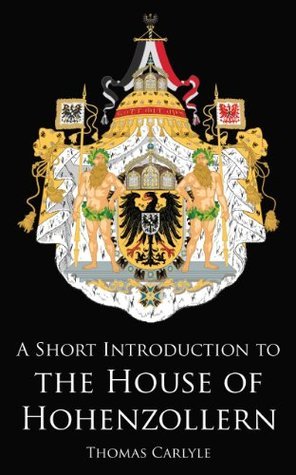
A Short Introduction to the House of Hohenzollern
- Tytuł oryginalny
- Atomic Habits
- Język oryginału
- Angielski
- Liczba stron
- 320
- Wydawnictwo
- Avery
O tej książce
The German princely family of Hohenzollern, which ruled over Brandenburg from 1415, has furnished the kings of Prussia since 1701, and since 1871 those kings have also been German emperors. The Hohenzollerns were originally owners of a castle on the Upper Danube, at no great distance from the ancestral seat of the Hapsburg family. They acquired influence at the court of Swabia, and in 1192 had established themselves in Nuremberg, where in that year Frederick I became burggraf. When Rudolph I, founder of the house of Hapsburg, finally defeated his rival, Ottocar of Bohemia (1278), his cause was saved by the assistance of a Hohenzollern—Frederick of Nuremberg.The Hohenzollerns made fortunate marriages and shrewd purchases and the descendants of Frederick I, succeeding to his burggravate, in the course of time acquired great estates in Franconia, Moravia, and Burgundy. Through their increasing wealth—whereby in the fifteenth century they had gained a position similar to that of the present Rothschilds—and by use of their political abilities, they attained commanding influence in the councils of the German princes.Such was the eminence of this powerful family at the time when they acquired the electorate of Brandenburg, the nucleus of the present kingdom of Prussia. Brandenburg was a district formerly inhabited by the Wends, a Slavic people, from whom it was taken in 926 by Henry the Fowler, King of Germany, of which kingdom it afterward became a margravate. Its first margrave was Albert the Bear, under whom, about 1150, it was made an electorate; from Albert's line it passed to Louis the Bavarian, in 1319; and in 1371 it was transferred to Charles (Karl) IV. On the death of Charles, his son and successor Wenzel (Wenceslaus) relinquished Brandenburg to his brothers, as told by Carlyle, who in his own pictorial manner describes the subsequent complications which finally resulted in giving that possession to the ancestors of the present ruling house of Germany.
Więcej od Thomas Carlyle
A Carlyle Reader
Thomas Carlyle
A Century of English Essays: Reflections in Literary Time: A Journey Through English Essayistic Brilliance
William Shakespeare, Jonathan Swift, Robert Louis Stevenson, Samuel Taylor Coleridge, Charles Dickens, William Hazlitt, William Wordsworth, William Makepeace Thackeray, G.K. Chesterton, W.B. Yeats, Edward Thomas, Percy Bysshe Shelley, Hilaire Belloc, Geoffrey Chaucer, Alexander Pope, Richard Steele, Francis Bacon, Thomas Carlyle, Edmund Gosse, Richard Jefferies, Alice Meynell, Joseph Addison, Austin Dobson, Augustine Birrell, William Caxton, Grace Rhys
A Cornucopia of Knowledge: 24 Didactic Fiction Books: Middlemarch, Charge It', Horace Chase, The Wedding Guest, The Governess, Sevenoaks, etc.
George Eliot, H.G. Wells, Mary Wollstonecraft, J.G. Holland, John Ruskin, Thomas Carlyle, Irving Bacheller, Constance Fenimore Woolson, Horatio Alger Jr., Sarah Fielding, T.S. Arthur, Hannah More, Brand Whitlock, Mary H. Eastman, James Oppenheim, George Horace Lorimer, A.L.O.E., Silas Xavier Floyd, Margaret Murray Robertson, Eleanora H. Stooke, George Griswold Livermore
Arbeiten und nicht verzweifeln
Thomas Carlyle