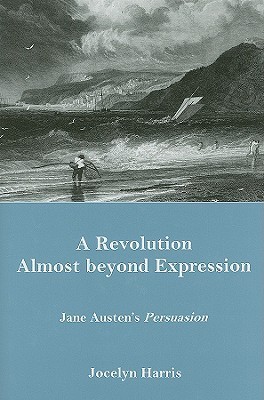
A Revolution Almost Beyond Expression: Jane Austen's Persuasion
- Tytuł oryginalny
- Atomic Habits
- Język oryginału
- Angielski
- Liczba stron
- 320
- Wydawnictwo
- Avery
O tej książce
To praise Jane Austen's novels only as stylistic masterpieces is to strip them of the historical, cultural, and literary contexts that might otherwise illuminate them. By focusing primarily on the political, historical, satiric, actively intertextual, and deeply sexualized text of Persuasion, Jocelyn Harris seeks to reconcile the so-called insignificance of her content with her high canonical status, for Austen's interactions with real and imagined worlds prove her to be innovative, even revolutionary. This book answers common assertions that Austen's content is restricted; that being uneducated and a woman, she could only write unconsciously, realistically, and autobiographically of what she knew; that her national and sexual politics were reactionary; and that her novels serve mainly as havens from reality. Such ideas arose from literal readings of Austen's letters, the family's representation of her as a gentle, unlearned genius, and the assumption that she could not write about the Napoleonic Wars. Persuasion is, though, permeated with references to war as well as peace. Harris suggests that Persuasion may respond to Walter Scott's review of Emma, Austen's correspondence with Fanny Knight, hostile reviews of Frances Burney's The Wanderer, contemporary attacks on the novel, and her own defense of fiction in Northanger Abbey. Self-critical in revision, Austen calls on Byron, Shakespeare, Napoleon, and Cook to modify wartime constructions of English masculinity such as Southey's Nelson. Similarly, her critique of Scott's first three novels confirms that her attitude toward class and gender is far from reactionary. Persuasion reveals Austen's patriotism, her pioneering lyricism, and her hopes for sexual equality. Although like Turner she portrays Lyme as sublime and liminally open to change, she attacks Bath, a city shadowed by mortality and corruption, with a savage indignation characteristic of contemporary satire. Persuasion sketches a society founded on merit and distributive justice, its turn from woe to joy derived not so much from her own life as from the seasonal resurrections of Shakespeare's late tragicomedies, her religious beliefs, and the nation's mixed grief and jubilee after Waterloo. Harris draws on new information to argue that Austen is an outward looking, intertextually aware, and remarkably self-conscious author.
Więcej od Jocelyn Harris
Anna Letitia Barbauld: New Perspectives
Isobel Grundy, Jocelyn Harris, Isobel Armstrong, Rachel Trethewey, Sonia Hofkosh, Stephen Bygrave, Michelle Levy, Scott Krawczyk, Sabine Volk-Birke, Felicity James, E.J. Clery, Gillian Dow, Joanna Wharton, Naomi Lightman
Approaches to Teaching the Novels of Samuel Richardson
Jocelyn Harris
Jane Austen's Art of Memory
Jocelyn Harris
Persuasions: Persu: The Jane Austen Journal, No. 29, 2007
Karen Joy Fowler, Juliet McMaster, Douglas Murray, Janet Todd, Jocelyn Harris, Kelly M. McDonald, Jean Barman, Penny Gay, Peter Mathews, Carrol L. Fry, Phyllis Ferguson Bottomer, Barbara Britton Wenner, Tara Ghoshal Wallace, Deanna K. Kreisel, Marsha Huff, Sarah Raff, Tenille Nowak, Margie Burns, Palma Bjarnason, Chris F. Viveash, Alice Marie Villaseñor, Shannon E. Campbell, Theresa M. Kenney, Elizabeth Jane Steele, Ana Mitrić