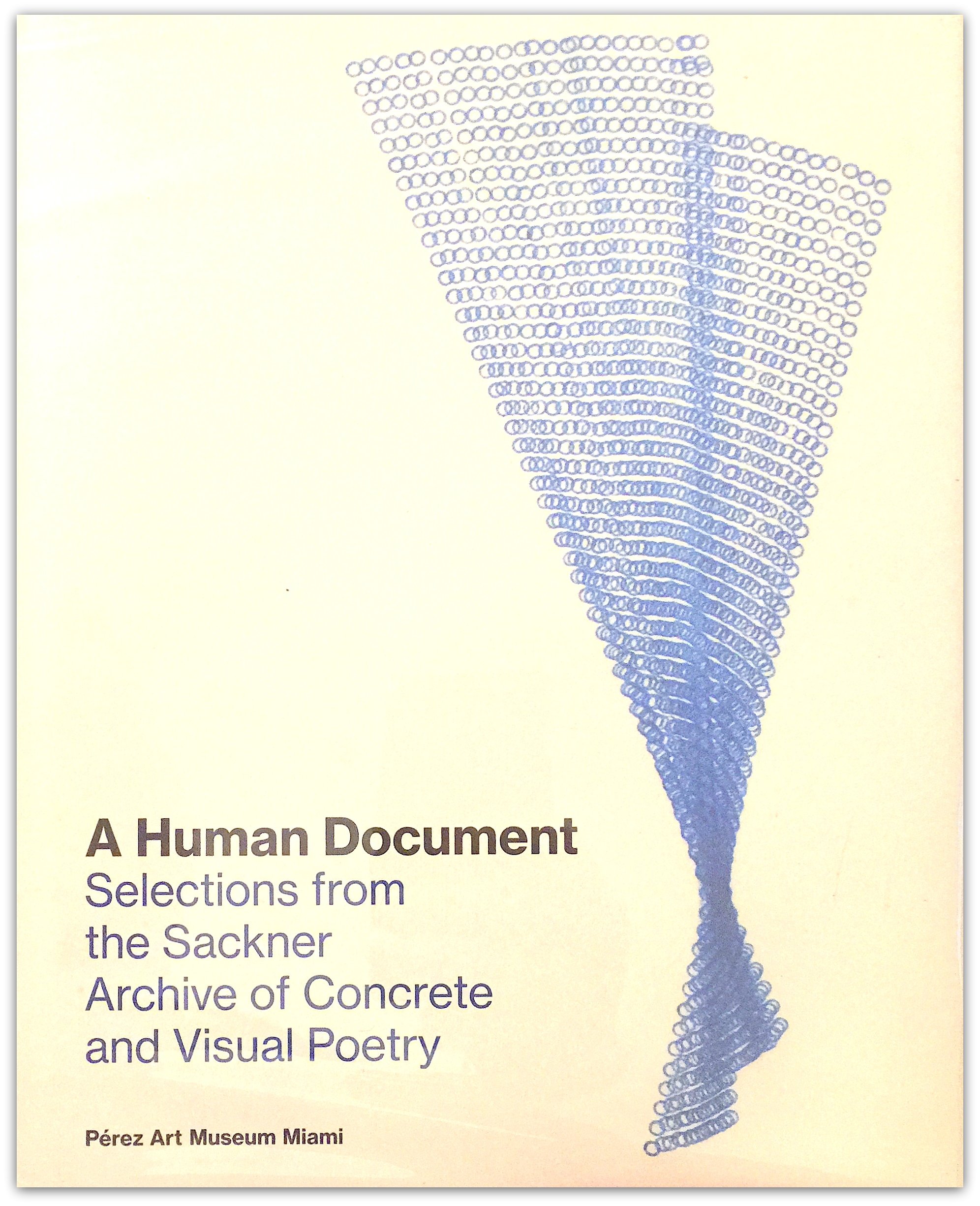
A Human Document: Selections From the Sackner Archive of Concrete and Visual Poetry
by Johanna Drucker, Thomas Collins, Sid Hoeltzell
- Tytuł oryginalny
- Atomic Habits
- Język oryginału
- Angielski
- Liczba stron
- 320
- Wydawnictwo
- Avery
O tej książce
Ruth and Marvin Sackner founded the Archive in Miami Beach, Florida in 1979, later moving it to Miami, Florida in 2005. Its initial mission was to establish a collection of books, critical texts, periodicals, ephemera, prints, drawings, collages, paintings, sculptures, objects, manuscripts, and correspondence dealing with precedent and contemporary, internationally produced, concrete and visual poetry. The antecedent material had at its starting point, Stephane Mallarme’s poem, “Un Coup de Des” (Cosmopolis, 1897). The historic examples included works with concrete/visual poetic sensibilities from such twentieth century art movements as Italian Futurism, Russian and Eastern European Avant Garde, Dada, Surrealism, Bauhaus, De Stijl, Ultra, Tabu-Dada, Lettrisme, and Ultra-Lettrisme. The initiators of the contemporary, international, concrete poetic movement included Öyvind Fahlstrom (1953), Eugen Gomringer (1953) and the Noigandres Group, i.e., Augusto De Campos, Haroldo De Campos, and Decio Pignatari (1955). The Sackners collected their works as well as those of subsequent poets and over the years expanded the scope of the Archive to include unique or small edition artist books that integrated text and image or consisted of experimental typography. They added examples of typewriter art and poetry, experimental calligraphy, correspondence art, stamp art, sound poetry, performance poetry, micrography, assembling periodicals, ‘zines,’ graphic design, and artist magazines as well as conventional poetry and prose written by concrete/visual poets and artists in the collection. Further, they collected experimental typographic, text and image works from such contemporary art movements as Fluxus, Transfuturism, and Inism. They included experimental fictional and non-fictional books with uniquely designed layouts such as Raymond Federman’s “Double or Nothing,” Alasdair Gray’s “1982 Janine,” B.E. Johnson’s “House Mother A Geriatric Comedy...