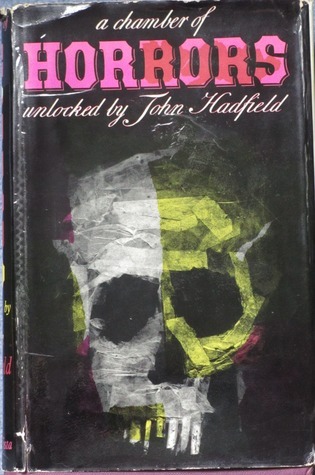
A Chamber of Horrors: An Anthology of the Macabre in Words and Pictures
by William Shakespeare, Charles Dickens, Graham Greene, Ray Bradbury, Thomas Hardy, Edgar Allan Poe, Oscar Wilde, William Blake, John Milton, John Addington Symonds, Emily Brontë, Ambrose Bierce, Charlotte Perkins Gilman, Leonid Andreyev, Thomas Middleton, William Sansom, Angus Wilson, Charles Baudelaire, Robert Browning, Michael Ayrton, D.B. Wyndham-Lewis, John Collier, J. Sheridan Le Fanu, John Wyndham, John Dryden, Roald Dahl, Hesiod, Walter de la Mare, John Lennon, Charles Causley, Evelyn Waugh, Harry Graham, George D. Painter, Arthur Symons, William Ernest Henley, Cyril Tourneur, George Crabbe, Robert Blair, John Hadfield, Samuel Warren
- Tytuł oryginalny
- Atomic Habits
- Język oryginału
- Angielski
- Liczba stron
- 320
- Wydawnictwo
- Avery
O tej książce
From the inside front of the dustjacket:“… In ”A Chamber of Horrors a master anthologist whose Book of Beauty and other such collections have delighted thousands, has produced something quite distinctive in anthologies of the macabre – a spine-chilling assemblage of not only stories by the masters but also of ‘sick’ poetry and the horrific theme in art.The names of the story tellers represented are a sufficient indication of their quality, ranging as they do from ‘Monk’ Lewis, Edgar Allen Poe and Le Fanu to Graham Greene, Evelyn Waugh, Angus Wilson and Ray Bradbury. Although some famous tales are here, Mr Hadfield has been at pains to avoid the obvious, and there will be some horrible surprises for many readers – such as the early nineteenth century masterpiece ‘The Spectra-Smitten’ by Samuel Warren, a truly tragic tale by T.F. Powys and a searing study in Scientific Macabre by Roald Dahl.The poems, by such varied authors as Shakespeare and De La Mare, Baudelaire and William Blake, add poison to the dish, the piquancy of which is indicated by the appearance, in words and pictures, of John (Beatle) Lennon.The most original element perhaps in this witches brew is a brilliantly chosen series of examples of the pictorial art of the macabre – a subject of intense interest which has been very little studied. Mr Hadfield traces the horrific theme through works by Caravaggio, Pieter Bruegel, Hieronymus Bosch, Fuseli and Goya, down to the fantastic effulgence of the macabre in paintings by Picasso, Miró, Paul Klee, Salvador Dali and other surrealist painters of our own time. If this were not so loathsome a book we should have no hesitation in describing it as a very beautiful one.”