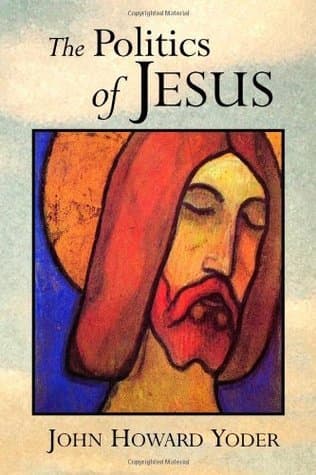
The Politics of Jesus
autor John Howard Yoder
O tej książce
Tradition has painted a portrait of a Savior who stands aloof from governmental concerns and who calls his disciples to an apolitical life. But such a picture of Jesus is far from accurate, according to John Howard Yoder. This watershed work in New Testament ethics leads us to a Savior who was deeply concerned with the agenda of politics and the related issues of power, status, and right relations. By canvassing Luke's Gospel, Yoder argues convincingly that the true impact of Jesus' life and ministry on his disciples' social behavior points to a specific kind of Christian pacifism in which "the cross of Christ is the model of Christian social efficacy." This second edition of The Politics of Jesus provides up-to-date interaction with recent publications that touch on Yoder's timely topic. Following most of the chapters are new "epilogues" summarizing research conducted during the last two decades - research that continues to support the outstanding insights set forth in Yoder's original work.
Gdzie kupić
Brak dostępnych opcji zakupu.
Linki w tej sekcji są linkami afiliacyjnymi - jeśli po kliknięciu kupisz książkę, otrzymamy prowizję od sklepu. Cena dla Ciebie pozostaje taka sama.
Więcej od John Howard Yoder
Body Politics: Five Practices of the Christian Community Before the Watching World
John Howard Yoder
The Original Revolution: Essays on Christian Pacifism
John Howard Yoder
Watch for the Light: Readings for Advent and Christmas
Kathleen Norris, Martin Luther, John Donne, Jane Kenyon, Thomas Aquinas, Sylvia Plath, C.S. Lewis, Madeleine L'Engle, Thomas Merton, Henri J.M. Nouwen, Dietrich Bonhoeffer, Edith Stein, Dorothy Day, Eberhard Arnold, T.S. Eliot, Giovanni Papini, Karl Barth, Ernesto Cardenal, Charles Moore, Philip Yancey, J.B. Phillips, William H. Willimon, John Howard Yoder, Gail Godwin, Brennan Manning, Karl Rahner, Leonardo Boff, Jürgen Moltmann, Meister Eckhart, Gian Carlo Menotti, Evelyn Underhill, Gustavo Gutiérrez, Gerard Manley Hopkins, William Stringfellow, Romano Guardini, Alfred Delp, J. Heinrich Arnold, Friedrich Wilhelm Förster, Dorothee Sölle, Christoph Friedrich Blumhardt, Loretta Ross-Gotta, Bernard of Clairvaux, John Chrysostom, Oscar Romero, Isaac Penington, Philip Britts, Annie Dillar, J.T. Clement, Emmy Arnold

What Would You Do?
John Howard Yoder