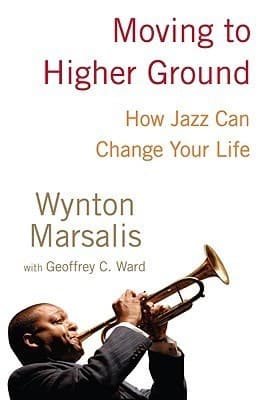
Moving to Higher Ground: How Jazz Can Change Your Life
autor Geoffrey C. Ward, Wynton Marsalis
O tej książce
“In this book I hope to reach a new audience with the positive message of America’s greatest music, to show how great musicians demonstrate on the bandstand a mutual respect and trust that can alter your outlook on the world and enrich every aspect of your life–from individual creativity and personal relationships to conducting business and understanding what it means to be American in the most modern sense.”–Wynton MarsalisIn this beautiful book, the Pulitzer Prize-winning musician and composer Wynton Marsalis explores jazz and how an understanding of it can lead to deeper, more original ways of being, living, and relating–for individuals, communities, and nations. Marsalis shows us how to listen to jazz, and through stories about his life and the lessons he has learned from other music greats, he reveals how the central ideas in jazz can influence the way people think and even how they behave with others, changing self, family, and community for the better. At the heart of jazz is the expression of personality and individuality, coupled with an ability to listen to and improvise with others. Jazz as an art–and as a way to move people and nations to higher ground–is at the core of this unique, illuminating, and inspiring book, a master class on jazz and life by a brilliant American artist. Advance praise for Moving to Higher Ground “An absolute joy to read. Intimate, knowledgeable, supremely worthy of its subject. In addition to demolishing mediocre, uniformed critics, Moving to Higher Ground is a meaningful contribution to music scholarship.”–Toni Morrison“I think it should be in every bookstore, music store, and school in the country.” –Tony Bennett “Jazz, for Wynton Marsalis, is nothing less than a search for wisdom. He thinks as forcefully, and as elegantly, as he swings. When he reflects on improvisation, his subject is freedom. When he reflects on harmony, his subject is diversity and conflict and peace. When he reflects on the blues, his subject is sorrow and the mastery of it–how to be happy without being blind. There is philosophy in Marsalis’s trumpet, and in this book. Here is the lucid and probing voice of an uncommonly soulful man.”–Leon Wieseltier, literary editor, The New Republic “Wynton Marsalis is absolutely the person who should write this book. Here he is, as young as morning, as fresh as dew, and already called one of the jazz greats. He is not only a seer and an exemplary musician, but a poet as well. He informs us that jazz was created, among other things, to expose the hypocrisy and absurdity of racism and other ignorances in our country. Poetry was given to human beings for the same reason. This book could be called “How Love Can Change Your Life,” for there could be no jazz without love. By love, of course, I do not mean mush, or sentimentality. Love can only exist with courage, and this book could not be written without Wynton Marsalis’s courage. He has the courage to make powerful music and to love the music so, that he willingly shares its riches with the entire human family. We are indebted to him.” –Maya Angelou
Gdzie kupić
Brak dostępnych opcji zakupu.
Linki w tej sekcji są linkami afiliacyjnymi - jeśli po kliknięciu kupisz książkę, otrzymamy prowizję od sklepu. Cena dla Ciebie pozostaje taka sama.
Więcej od Geoffrey C. Ward

Jazz ABZ: An A to Z Collection of Jazz Portraits
Wynton Marsalis, Phil Schaap, Paul Rogers
Squeak, Rumble, Whomp! Whomp! Whomp!: A Sonic Adventure
Wynton Marsalis, Paul Rogers

A Disposition to Be Rich: How a Small-Town Pastor's Son Ruined an American President, Brought on a Wall Street Crash, and Made Himself the Best-Hated Man in the United States
Geoffrey C. Ward
A First-Class Temperament: The Emergence of Franklin Roosevelt
Geoffrey C. Ward

Before the Trumpet: The Young Franklin Roosevelt
Geoffrey C. Ward

Closest Companion: The Unknown Story of the Intimate Relationship Between Franklin Roosevelt and Margaret Suckley
Geoffrey C. Ward

Jazz: A History of America's Music
Geoffrey C. Ward, Ken Burns

Mark Twain
Geoffrey C. Ward, Ken Burns

Not for Ourselves Alone: The Story of Elizabeth Cady Stanton and Susan B. Anthony
Geoffrey C. Ward, Ken Burns

The Civil War: An Illustrated History
Geoffrey C. Ward, Ric Burns, Ken Burns

The Vietnam War
Geoffrey C. Ward, Ken Burns

The War: An Intimate History, 1941-1945
Geoffrey C. Ward, Ken Burns
The West
Geoffrey C. Ward, Ken Burns, Stephen Ives
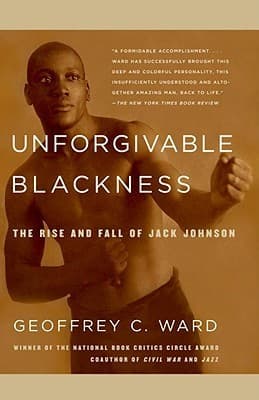
Unforgivable Blackness: The Rise and Fall of Jack Johnson
Geoffrey C. Ward

What If? 2: Eminent Historians Imagine What Might Have Been
Caleb Carr, Victor Davis Hanson, Robert Cowley, Andrew Roberts, Alistair Horne, Josiah Ober, Cecelia Holland, Geoffrey Parker, William H. McNeill, Theodore K. Rabb, Richard B. Frank, Robert L. O'Connell, James D. Bradley, David Kahn, Theodore F. Cook, Tom Wicker, Lance Morrow, Geoffrey C. Ward, Williamson Murray, George Feifer, James Chace, Carlos M.N. Eire, Roger Spiller, John Lukacs, Robert Katz