
The Eternal Footman
autor James K. Morrow
O tej książce
Dealing with the Death of God With the publication of The Eternal Footman, James Morrow brings to a close one of the most audacious, brilliantly sustained accomplishments in recent American the Godhead Cycle. This "trilogy," which is really a set of interrelated, essentially independent theological comedies, began in 1994 with the World Fantasy Award-winning Towing Jehovah and continued, three years later, with Blameless in Abaddon. As Morrow tells us in his acknowledgments, the novels can be read singly, sequentially, or in any order at all. However you choose to do it, I strongly recommend that you read all three. They are simply too good to ignore. In Towing Jehovah, the two-mile-long corpse of God the Father is found floating in the North Atlantic. Anthony Van Horne, disgraced captain of the supertanker Carpco Valparaiso, is commissioned by the Vatican to tow the body (known thereafter as the Corpus Dei) to its final resting place in the Arctic Sea. In Blameless in Abaddon, the Corpus Dei drifts away from that final resting place and comes to the attention of a consternated world. Shortly afterward, medical testimony indicates that God is not entirely dead. Though deeply comatose, He retains a degree of neural activity and eventually finds Himself bound over for trial in the International Court of Justice in The Hague. There, Martin Candle -- a sort of latter-day embodiment of Job -- prosecutes Him, on behalf of the world's victims, for crimes against humanity. The Eternal Footman opens ten years after the initial discovery of the Corpus Dei, which, by this time, has begun to come apart. God's flesh has completely dissolved, while His skull -- after vomiting out its own brain -- has detached itself from the body and ascended into the heavens, where it floats above the Western Hemisphere in geosynchronous orbit, a tangible symbol of mortality. Beneath that symbol -- the governing image of this book -- Morrow has constructed a very funny, very moving comedy about love, death, and existential dread in the post-theistic age. Morrow drives a large cast of characters -- some new, some familiar from earlier volumes -- through a picaresque plot dominated by a single, central the plague of fetches. Early in the narrative, Nora Burkhart -- a widowed ex-schoolteacher with a previously unsuspected capacity for heroism -- learns that her only son, Kevin, has literally been invaded by a lethal doppelganger named Quincy. Quincy is a the tangible manifestation of Kevin's death and the embodiment of what T. S. Eliot called the Eternal Footman. Under Quincy's parasitic influence, Kevin becomes gravely, perhaps terminally, ill. Immediately afterward, fetches begin to proliferate across the hemisphere, bringing death and despair to an already bewildered populace. Nora's stubborn determination to save her son leads her on an odyssey across the blighted landscape of a world suffering from "theothanatopsis syndrome," a fatal preoccupation with the death of God. Nora's journey is the central thread in a complex narrative that moves from Massachusetts to Mexico and from the world of a traveling theater troupe to the drug-induced dream worlds of cities known as Deus Absconditus and Holistica. In the course of her travels, Nora's story intertwines with those of the novel's other principal participants. Included among them are Anthony Van Horne, who once towed Jehovah to His arctic tomb; Adrian Lucido, psychoanalyst, charlatan, and corrupt founder of the Church of Earthly Affirmation; and Gerard Korty, world-renowned sculptor. Much of The Eternal Footman concerns the creation of Korty's masterpiece, the "Stone Gospel," which is directly inspired by a book called Parables of the Post-Theistic Age by Towing Jehovah's Thomas Ockham. In the "Stone Gospel," Korty gives concrete form to the novel's animating humanist the vision of a world no longer dominated by the vast, transcendental abstractions of the Age of Christianity. In Ockham's words, "If the coming era must have a religion, then let it be a religion of everyday miracles and quotidian epiphanies, of short eternities and little myths. In the post-theistic age, let Christianity become merely kindness, salvation transmute into art, truth defer to knowledge, and faith embrace a vibrant doubt." No brief summary can do more than suggest the scope and quality of Morrow's achievement, both in The Eternal Footman and in the equally ambitious novels that preceded it. No summary can adequately convey the constant play of wit, learning, and intellectual rigor that Morrow brings to this entire astonishing enterprise. The Godhead Cycle is unlike anything that has appeared in American fiction in recent years, and it deserves serious, widespread attention. All three volumes are consummate examples of the satirist's art, and they are going t...
Gdzie kupić
Brak dostępnych opcji zakupu.
Linki w tej sekcji są linkami afiliacyjnymi - jeśli po kliknięciu kupisz książkę, otrzymamy prowizję od sklepu. Cena dla Ciebie pozostaje taka sama.
Więcej od James K. Morrow

Alternate Empires
Karen Joy Fowler, Larry Niven, Robert Silverberg, Barry N. Malzberg, Gregory Benford, Harry Turtledove, Poul Anderson, Frederik Pohl, Kim Stanley Robinson, George Alec Effinger, James K. Morrow, James P. Hogan
Bible Stories For Adults: Irreverent Sci-Fi Short Stories – Includes Nebula Award Winner
James K. Morrow
Niewinni w piekle
James K. Morrow
Brave New Worlds
M. Rickert, Geoff Ryman, Ursula K. Le Guin, Ray Bradbury, Shirley Jackson, Harlan Ellison, Neil Gaiman, Robert Silverberg, Caitlín R. Kiernan, Philip K. Dick, Cory Doctorow, Adam-Troy Castro, Kurt Vonnegut Jr., Orson Scott Card, C.C. Finlay, Bryan Talbot, Kim Stanley Robinson, J.G. Ballard, Paolo Bacigalupi, Kate Wilhelm, James K. Morrow, Tobias S. Buckell, Sarah Langan, Carrie Vaughn, Alexander C. Irvine, John Joseph Adams, Jeremiah Tolbert, Ross E. Lockhart, Genevieve Valentine, S.L. Gilbow, Vylar Kaftan, Heather Lindsley, Joseph Paul Haines, Matt Williamson, Joe Mastroianni
City of Truth
James K. Morrow

Ghosts by Gaslight
Theodora Goss, Jeffrey Ford, Terry Dowling, Margo Lanagan, Laird Barron, Marly Youmans, Gene Wolfe, Robert Silverberg, Jack Dann, Lucius Shepard, Garth Nix, Peter S. Beagle, Sean Williams, James K. Morrow, John Langan, Paul Park, Richard Harland, John Harwood
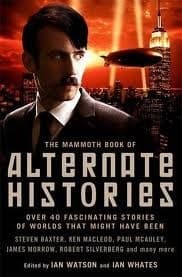
Mammoth Book of Alternate Histories
Kim Newman, Robert Silverberg, Stephen Baxter, Esther M. Friesner, Paul McAuley, Gregory Benford, Harry Turtledove, Fritz Leiber, Pat Cadigan, Harry Harrison, Judith Tarr, Marc Laidlaw, A.A. Attanasio, Suzette Haden Elgin, Frederik Pohl, Kim Stanley Robinson, Ken MacLeod, James K. Morrow, Ian Watson, Ian R. MacLeod, George Zebrowski, Pamela Sargent, Rudy Rucker, Eugene Byrne, Chris Robertson, Pierre Gévart, Tom Shippey

Only Begotten Daughter
James K. Morrow

Shambling Towards Hiroshima
James K. Morrow

The Cat's Pajamas and Other Stories
James K. Morrow

The Continent of Lies
James K. Morrow
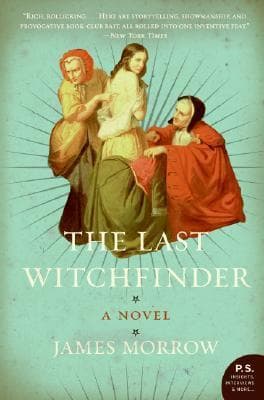
The Last Witchfinder
James K. Morrow
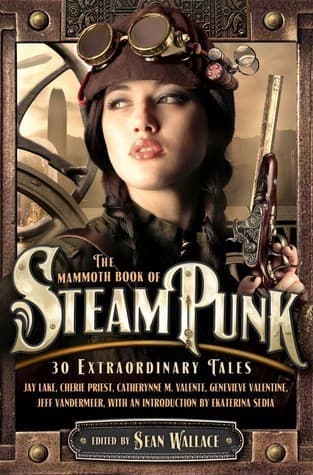
The Mammoth Book of Steampunk
Jeffrey Ford, Margo Lanagan, Michael Swanwick, Catherynne M. Valente, Jeff Vandermeer, Benjamin Rosenbaum, Caitlín R. Kiernan, Jay Lake, N.K. Jemisin, James K. Morrow, Lavie Tidhar, Tobias S. Buckell, Eileen Gunn, Aliette de Bodard, Cat Rambo, Genevieve Valentine, Mary Robinette Kowal, Nick Mamatas, Sean Wallace, Samantha Henderson, Shweta Narayan, Cherie Priest, Amal El-Mohtar, Matthew Kressel, Barth Anderson, Margaret Ronald, Nicole Kornher-Stace, Alex Dally MacFarlane, Peter M. Ball, Megan Arkenberg, Sharon Mock, Elise Tobler
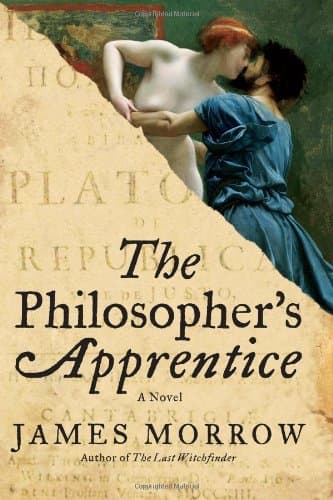
The Philosopher's Apprentice
James K. Morrow
The SFWA European Hall of Fame: Sixteen Contemporary Masterpieces of Science Fiction from the Continent
James K. Morrow, Kathryn Morrow
The Wine of Violence
James K. Morrow

Tak oto kończy się świat
James K. Morrow
Pióro archanioła
James K. Morrow
Year's Best Fantasy 2
Tanith Lee, Andy Duncan, Charles de Lint, Ursula K. Le Guin, David G. Hartwell, Gene Wolfe, Thomas Ligotti, Tim White, Devon Monk, Poul Anderson, Kage Baker, James P. Blaylock, Richard Parks, Thomas M. Disch, Diana L. Paxson, Marion Zimmer Bradley, Ted Chiang, R. Garcia y Robertson, James K. Morrow, Patrick O'Leary, Jo Walton, Uncle River, David D. Levine, Ashok K. Banker, Kate Riedel