O tej książce
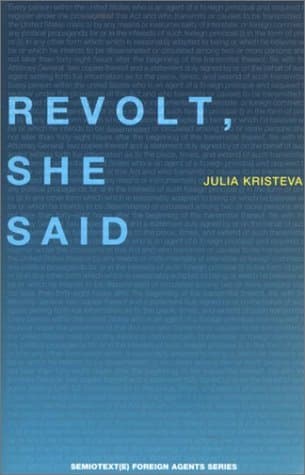
Julia Kristeva extends the definition of revolt beyond politics per se. May '68 in France expressed a fundamental version of not freedom to succeed, but freedom to revolt. Political revolutions ultimately betray revolt because they cease to question themselves. Revolt, as I understand it—psychic revolt, analytic revolt, artistic revolt—refers to a permanent state of questioning, of transformations, an endless probing of appearances. In this book, Julia Kristeva extends the definition of revolt beyond politics per se. Kristeva sees revolt as a state of permanent questioning and transformation, of change that characterizes psychic life and, in the best cases, art. For her, revolt is not simply about rejection and destruction—it is a necessary process of renewal and regeneration.
Gdzie kupić
Brak dostępnych opcji zakupu.
Linki w tej sekcji są linkami afiliacyjnymi - jeśli po kliknięciu kupisz książkę, otrzymamy prowizję od sklepu. Cena dla Ciebie pozostaje taka sama.
Więcej od Julia Kristeva

Czarne słońce: depresja i melancholia
Julia Kristeva
Desire in Language: A Semiotic Approach to Literature and Art
Julia Kristeva

Marriage as a Fine Art
Julia Kristeva, Philippe Sollers

Hannah Arendt
Julia Kristeva

Murder in Byzantium: A Novel
Julia Kristeva

Potęga obrzydzenia. Esej o wstręcie
Julia Kristeva
Proust and the Sense of Time
Julia Kristeva
Revolution in Poetic Language
Julia Kristeva
Strangers to Ourselves
Julia Kristeva

Tales of Love
Julia Kristeva

The Kristeva Reader
Julia Kristeva

The Old Man and the Wolves
Barbara Bray, Julia Kristeva
This Incredible Need to Believe
Julia Kristeva
Un été avec Proust
Julia Kristeva, Nicolas Grimaldi, Jean-Yves Tadié, Antoine Compagnon, Adrien Goetz, Jérôme Prieur, Michel Erman, Raphaël Enthoven, Laura El Makki