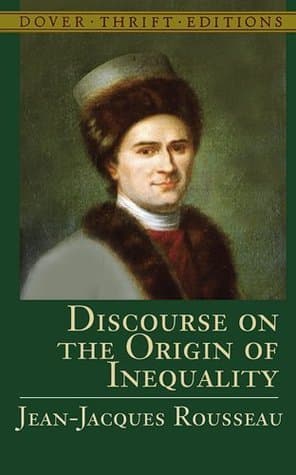
O tej książce
If humans are benevolent by nature, how do societies become corrupt? And how do governments founded upon the defense of individual rights degenerate into tyranny? These are the questions addressed by Jean-Jacques Rousseau's Discourse on the Origin of Inequality, a strikingly original inquiry into much-explored issues of 18th-century (and subsequent) philosophy: human nature and the best form of government.Rousseau takes an innovative approach by introducing a "hypothetical history" that presents a theoretical view of people in a pre-social condition and the ensuing effects of civilization. In his sweeping account of humanity's social and political development, the author develops a theory of human evolution that prefigures Darwinian thought and encompasses aspects of ethics, sociology, and epistemology. He concludes that people are inevitably corrupt as a result of both natural (or physical) inequalities and moral (or political) inequalities.One of the most influential works of the Enlightenment, the Discourse on the Origin of Inequality offers a thought-provoking account of society's origins and a keen criticism of unequal modern political institutions.
Gdzie kupić
Brak dostępnych opcji zakupu.
Linki w tej sekcji są linkami afiliacyjnymi - jeśli po kliknięciu kupisz książkę, otrzymamy prowizję od sklepu. Cena dla Ciebie pozostaje taka sama.
Więcej od Jean-Jacques Rousseau
A Discourse on Political Economy
Jean-Jacques Rousseau

Chloe Plus Olivia: An Anthology of Lesbian Literature from the Seventeenth Century to the Present
Rita Mae Brown, Carson McCullers, Radclyffe Hall, Charles Baudelaire, J. Sheridan Le Fanu, Aphra Behn, Anne Lister, William Rounseville Alger, Rose O'Neill, Katherine Philips, Henry Handel Richardson, Angelina Weld Grimké, Charlotte Mew, Charlotte Charke, Clemence Dane, Renée Vivien, Gertrude Stein, Henry Fielding, Mary Eleanor Wilkins Freeman, Constance Fenimore Woolson, Katharine Lee Bates, William Cullen Bryant, Willa Cather, Edith Cooper, Anaïs Nin, Emily Dickinson, Michel de Montaigne, Djuna Barnes, Maria Edgeworth, Anna Seward, Jean-Jacques Rousseau, Sigmund Freud, H.D., Colette, Lillian Faderman, Marie Madeleine, Sarah Ponsonby, Amy Lowell, Richard von Krafft-Ebing, Vita Sackville-West, Christina Rossetti, Helen R. Hull, Eleanor Butler, Juana Inés de la Cruz, Virginia Woolf, Jewelle Gomez, Audre Lorde, Sarah Orne Jewett, Katherine Mansfield, Katherine Bradley
Wyznania
Jean-Jacques Rousseau
Discourse on the Sciences and Arts and Polemics
Jean-Jacques Rousseau
Emil, czyli o wychowaniu
Jean-Jacques Rousseau
Nowa Heloiza
Jean-Jacques Rousseau
Of the Social Contract and Other Political Writings
Jean-Jacques Rousseau, Christopher Bertram, Quintin Hoare
On the Origin of Language
Jean-Jacques Rousseau, Johann Gottfried Herder
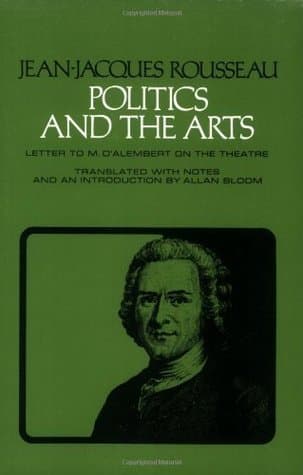
Politics and the Arts: Letter to M. D'Alembert on the Theatre
Jean-Jacques Rousseau
Marzenia samotnego wędrowca
Jean-Jacques Rousseau
Social Contract: Essays by Locke, Hume, and Rousseau
David Hume, Jean-Jacques Rousseau, John Locke, Ernest Barker
Spells of Enchantment: The Wondrous Fairy Tales of Western Culture
Hermann Hesse, Mark Twain, Rainer Maria Rilke, Jean-Jacques Rousseau, Johann Wolfgang von Goethe, Jacob Grimm, Angela Carter, W.B. Yeats, Italo Calvino, Theodor Storm, James Thurber, Wilhelm Grimm, Voltaire, Philip K. Dick, Hans Christian Andersen, Michael de Larrabeiti, William Hawthorne, Jack D. Zipes, Jane Yolen, Robin McKinley, August Strindberg, Robert Coover, Anatole France, Oscar Wilde, Stanisław Lem, Sylvia Townsend Warner, Charles Perrault, E.T.A. Hoffmann, Tanith Lee
The Basic Political Writings
Jean-Jacques Rousseau
The Communist Manifesto and Other Revolutionary Writings: Marx, Marat, Paine, Mao, Gandhi, and Others
Jean-Jacques Rousseau, Mao Zedong, Thomas Paine, Mahatma Gandhi, Bob Blaisdell, Vladimir Lenin, Karl Marx, Thomas Jefferson, Emma Goldman, Leon Trotsky, Jean Paul Marat, George Jacques Danton
The Complete Harvard Classics - ALL 71 Volumes: The Five Foot Shelf & The Shelf of Fiction: The Famous Anthology of the Greatest Works of World Literature
Honoré de Balzac, George Sand, Mark Twain, Jane Austen, Nathaniel Hawthorne, John Dryden, Percy Bysshe Shelley, Euripides, Theodor Storm, Thomas Hobbes, Sophocles, Blaise Pascal, Ben Jonson, Laurence Sterne, Thomas Carlyle, Francis Bacon, William Makepeace Thackeray, John Milton, James Russell Lowell, Henry James, Plato, John Fletcher, Edward Everett Hale, Bret Harte, Guy de Maupassant, Washington Irving, René Descartes, John Webster, Theodor Fontane, Jonathan Swift, Sydney Smith, Thomas de Quincey, Alessandro Manzoni, Alfred de Musset, Gotthold Ephraim Lessing, William Shakespeare, Walter Scott, Charles Darwin, Marcus Aurelius, Juan Valera, Christopher Marlowe, Benvenuto Cellini, Adam Smith, Martin Luther, Philip Sidney, Henry Fielding, Thomas Dekker, Thomas Malory, Marcus Tullius Cicero, Epictetus, John Bunyan, Oliver Goldsmith, Francis Beaumont, Gottfried Keller, Philip Massinger, Abraham Cowley, Joseph Lister, Walter Raleigh, William Harvey, Jean Froissart, Thomas à Kempis, William Penn, Ambroise Paré, William Allan Neilson, Louis Pasteur, Francis Drake, Tacitus, Miguel de Cervantes Saavedra, Fyodor Dostoevsky, Charles William Eliot, Ernest Renan, Aeschylus, Hans Christian Andersen, Aesop, Charles Lamb, Ivan Turgenev, John Woolman, Simon Newcomb, Augustine of Hippo, John Ruskin, Immanuel Kant, Lord Byron, John Locke, Homer, Richard Steele, David Garrick, Walter Bigges, Samuel Johnson, Thomas Babington Macaulay, Edward Haies, Voltaire, Michel de Montaigne, Thomas Browne, Robert Burns, George Eliot, Aristophanes, Daniel Defoe, Edmund Burke, Alphonse Daudet, Leigh Hunt, Charles-Augustin Sainte-Beuve, Michael Faraday, Hermann von Helmholtz, Pliny the Younger, Friedrich Schiller, Wilhelm Grimm, Herodotus, Jean-Jacques Rousseau, Samuel Taylor Coleridge, Giuseppe Mazzini, Victor Hugo, Richard Brinsley Sheridan, Richard Henry Dana Jr., William Henry Harrison, Dante Alighieri, Izaak Walton, Johann Wolfgang von Goethe, John Stuart Mill, George Berkeley, Leo Tolstoy, Bjørnstjerne Bjørnson, Alexander L. Kielland, Edgar Allan Poe, Benjamin Franklin, Philip Nichols, Archibald Geikie, Thomas More, Robert Louis Stevenson, Oliver Wendell Holmes Sr., Pierre Corneille, Francis Pretty, Jacob Grimm, Virgil, Ralph Waldo Emerson, Niccolò Machiavelli, Plutarch, Pedro Calderón de la Barca, Charles Dickens, Henry David Thoreau, Molière, Hippocrates, Jean Racine, Robert Browning, Joseph Addison, William Roper

The Confessions of Jean Jacques Rousseau 3
Jean-Jacques Rousseau
The First and Second Discourses
Jean-Jacques Rousseau, Judith R. Masters
Umowa społeczna
Jean-Jacques Rousseau
The Social Contract & Other Later Political Writings
Jean-Jacques Rousseau