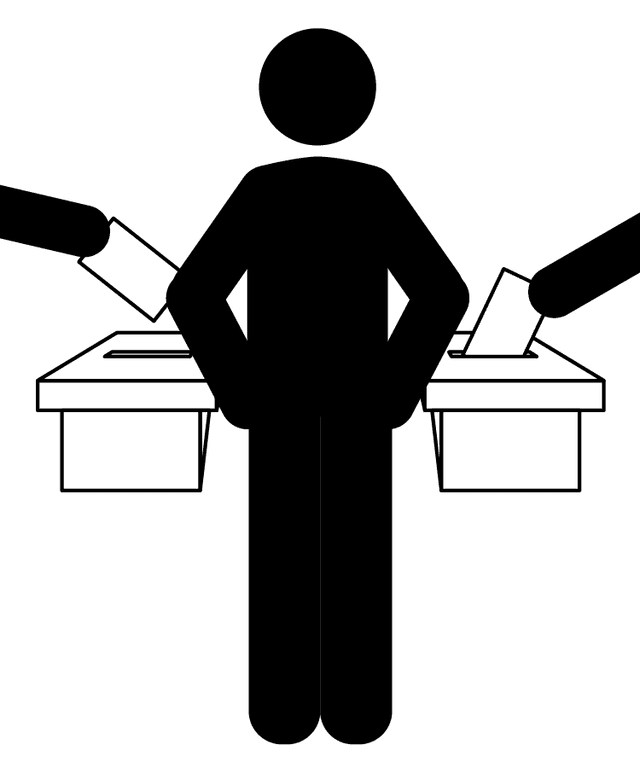
The Watcher
O tej książce
"The Watcher depicts a day in the life of Amerigo Ormea, a dedicated Italian Communist, who acts as a poll watcher at a special election station inside the walls of the Cottolengo Hospital for Incurables, a city within the city of Turin. Ormea's day begins in darkness and rain. The strange, pathetic inhabitants of the hospital (monsters and madmen, the blind, the halt and the lame) shuffle in or are carried in to vote, the nuns and priests guiding their hands to mark ballots opposite the name of the Christian Democratic candidate.As Ormea challenges the traditional political practices of the inferno‐like hospital ward, his own life comes under scrutiny as well. By day's end, he has learned new things about himself, his relationship to the Party, to the people and to his mistress, and has stopped the farcical custom of voting the moronic and the unconscious. We, in turn, have seen, in microcosm, the contradictory Italian political process.The Watcher essence, Calvino demonstrates, is that the labor of pessimistic optimists such as the Communist Ormea and the optimistic pessimists of the Church and the conservative political parties yields the possibility of a city grander and more humane than either the Cottolengo complex or Turin itself. That city is a perfect place whose crippled populace, having used comrades and Catholics as a means to this end, has bettered itself by the labors of its own hands. As the crepuscular light filters in through the hospital windows, Ormea catches a glimpse of this ideal.[…]The general picture, then, which Calvino develops is that of a “two‐headed” society whose Battle of the Books—between the Bible and the works of the young Marx— ends, for most men, in a dead lock. If, as Amerigo Ormea muses, its “net of objective contradictions” is to be broken, each man must “achieve an awareness in person” of its complex nature.The function of the Watcher in Calvino's work is clearly to witness (for the reader) images of the fabulous meaning and worth of the crooked, broken, sickly and contradictory things of this world." (Alan Cheuse)
Gdzie kupić
Brak dostępnych opcji zakupu.
Więcej od Italo Calvino
Black Water: The Book of Fantastic Literature
Edith Wharton, Jorge Luis Borges, Ray Bradbury, Graham Greene, Alberto Manguel, Hilaire Belloc, Jun'ichirō Tanizaki, Marguerite Yourcenar, Tennessee Williams, Francis King, David Garnett, Flann O'Brien, Max Beerbohm, Jean Cocteau, Julio Cortázar, Marco Denevi, Charles Williams, Horacio Quiroga, Manuel Mujica Lainez, Alex Comfort, Giovanni Papini, Cynthia Ozick, Howard Fast, Brian Moore, L.P. Hartley, E.M. Forster, João Guimarães Rosa, Silvina Ocampo, Marcel Aymé, Bruno Schulz, Italo Calvino, Charles Dickens, Léon Bloy, André Pieyre de Mandiargues, George Hitchcock, Pedro Antonio de Alarcón, Virgilio Piñera, Jules Verne, Hermann Hesse, Joanne Greenburg, Daphne du Maurier, I.A. Ireland, M.R. James, Adolfo Bioy Casares, Ryūnosuke Akutagawa, Saki, Robert Smythe Hichens, Juan Manuel
Niewidzialne miasta
Italo Calvino
Italian Folktales: The Literary Collection of Two Hundred Classic Tales and Traditional Italian Folklore
Italo Calvino

Short Stories in Italian: New Penguin Parallel Text
Primo Levi, Susanna Tamaro, Stefano Benni, Goffredo Parise, Leonardo Sciascia, Antonio Tabucchi, Italo Calvino, Sandra Petrignani, Nick Roberts, Dacia Marini