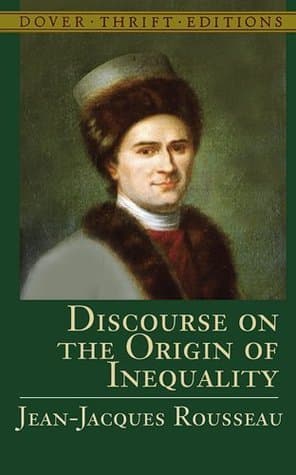
Discourse on the Origin of Inequality
O tej książce
If humans are benevolent by nature, how do societies become corrupt? And how do governments founded upon the defense of individual rights degenerate into tyranny? These are the questions addressed by Jean-Jacques Rousseau's Discourse on the Origin of Inequality, a strikingly original inquiry into much-explored issues of 18th-century (and subsequent) philosophy: human nature and the best form of government.Rousseau takes an innovative approach by introducing a "hypothetical history" that presents a theoretical view of people in a pre-social condition and the ensuing effects of civilization. In his sweeping account of humanity's social and political development, the author develops a theory of human evolution that prefigures Darwinian thought and encompasses aspects of ethics, sociology, and epistemology. He concludes that people are inevitably corrupt as a result of both natural (or physical) inequalities and moral (or political) inequalities.One of the most influential works of the Enlightenment, the Discourse on the Origin of Inequality offers a thought-provoking account of society's origins and a keen criticism of unequal modern political institutions.
Gdzie kupić
Brak dostępnych opcji zakupu.
Więcej od Jean-Jacques Rousseau
A Discourse on Political Economy
Jean-Jacques Rousseau

Chloe Plus Olivia: An Anthology of Lesbian Literature from the Seventeenth Century to the Present
Emily Dickinson, Mary Eleanor Wilkins Freeman, Willa Cather, Christina Rossetti, Virginia Woolf, Rita Mae Brown, Anaïs Nin, Sigmund Freud, Katherine Mansfield, Carson McCullers, Sarah Orne Jewett, Jewelle Gomez, Charles Baudelaire, J. Sheridan Le Fanu, Djuna Barnes, William Cullen Bryant, Vita Sackville-West, Audre Lorde, Gertrude Stein, Radclyffe Hall, Henry Handel Richardson, Helen R. Hull, Amy Lowell, Katherine Bradley, Maria Edgeworth, Juana Inés de la Cruz, Jean-Jacques Rousseau, Henry Fielding, Michel de Montaigne, Charlotte Mew, H.D., Angelina Weld Grimké, Constance Fenimore Woolson, Colette, Katharine Lee Bates, Aphra Behn, Lillian Faderman, Charlotte Charke, Clemence Dane, Renée Vivien, Anne Lister, William Rounseville Alger, Rose O'Neill, Anna Seward, Katherine Philips, Edith Cooper, Richard von Krafft-Ebing, Marie Madeleine, Eleanor Butler, Sarah Ponsonby

Discourse on the Sciences and Arts and Polemics
Jean-Jacques Rousseau
Do contrato social
Jean-Jacques Rousseau