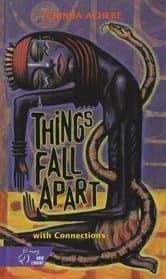
Things Fall Apart with Connections
autor Chinua Achebe
O tej książce
One of Chinua Achebe's many achievements in his acclaimed first novel, Things Fall Apart, is his relentlessly unsentimental rendering of Nigerian tribal life before and after the coming of colonialism. First published in 1958, just two years before Nigeria declared independence from Great Britain, the book eschews the obvious temptation of depicting pre-colonial life as a kind of Eden. Instead, Achebe sketches a world in which violence, war, and suffering exist, but are balanced by a strong sense of tradition, ritual, and social coherence. His Ibo protagonist, Okonkwo, is a self-made man. The son of a charming ne'er-do-well, he has worked all his life to overcome his father's weakness and has arrived, finally, at great prosperity and even greater reputation among his fellows in the village of Umuofia. Okonkwo is a champion wrestler, a prosperous farmer, husband to three wives and father to several children. He is also a man who exhibits flaws well-known in Greek tragedy: Okonkwo ruled his household with a heavy hand. His wives, especially the youngest, lived in perpetual fear of his fiery temper, and so did his little children. Perhaps down in his heart Okonkwo was not a cruel man. But his whole life was dominated by fear, the fear of failure and of weakness. It was deeper and more intimate than the fear of evil and capricious gods and of magic, the fear of the forest, and of the forces of nature, malevolent, red in tooth and claw. Okonkwo's fear was greater than these. It was not external but lay deep within himself. It was the fear of himself, lest he should be found to resemble his father. And yet Achebe manages to make this cruel man deeply sympathetic. He is fond of his eldest daughter, and also of Ikemefuna, a young boy sent from another village as compensation for the wrongful death of a young woman from Umuofia. He even begins to feel pride in his eldest son, in whom he has too often seen his own father. Unfortunately, a series of tragic events tests the mettle of this strong man, and it is his fear of weakness that ultimately undoes him. Achebe does not introduce the theme of colonialism until the last 50 pages or so. By then, Okonkwo has lost everything and been driven into exile. And yet, within the traditions of his culture, he still has hope of redemption. The arrival of missionaries in Umuofia, however, followed by representatives of the colonial government, completely disrupts Ibo culture, and in the chasm between old ways and new, Okonkwo is lost forever. Deceptively simple in its prose, Things Fall Apart packs a powerful punch as Achebe holds up the ruin of one proud man to stand for the destruction of an entire culture. --Alix Wilber
Gdzie kupić
Brak dostępnych opcji zakupu.
Linki w tej sekcji są linkami afiliacyjnymi - jeśli po kliknięciu kupisz książkę, otrzymamy prowizję od sklepu. Cena dla Ciebie pozostaje taka sama.
Więcej od Chinua Achebe

Czcigodny kacyk Nanga
Chinua Achebe
African Short Stories: Twenty Short Stories from Across the Continent
Chinua Achebe, C.L. Innes

Anthills of the Savannah
Chinua Achebe
Boża strzała
Chinua Achebe
Chike and the River
Chinua Achebe
Collected Poems
Chinua Achebe
Dead Men's Path
Chinua Achebe

Gods and Soldiers: The Penguin Anthology of Contemporary African Writing
Ngũgĩ wa Thiong'o, Chimamanda Ngozi Adichie, Nadine Gordimer, J.M. Coetzee, Chinua Achebe, Mia Couto, Helon Habila, Nuruddin Farah, Rob Spillman, Zakes Mda, Abdourahman A. Waberi, Mohamed Magani, Leila Aboulela, Nawal El Saadawi, Alain Mabanckou, Laila Lalami, Doreen Baingana, Mohammed Naseehu Ali, Marlene van Niekerk, Ivan Vladislavić, Boubacar Boris Diop, Yvonne Vera, Patrice Nganang, Fatou Diome, José Eduardo Agualusa, Aziz Chouaki, Niq Mhlongo, Binyavanga Wainaina, Ondjaki, Chris Abani, E.C. Osondu
Home & Exile
Chinua Achebe
How the Leopard Got His Claws
Mary GrandPré, Chinua Achebe
Marriage is a Private Affair
Chinua Achebe

Nie jest już łatwo
Chinua Achebe
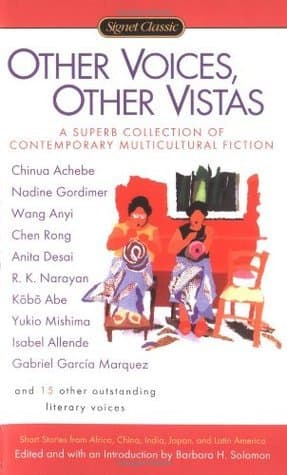
Other Voices, Other Vistas: Short Stories from Africa, China, India, Japan, and Latin America
Gabriel García Márquez, Ngũgĩ wa Thiong'o, Nadine Gordimer, Isabel Allende, Jorge Luis Borges, Various, Anita Desai, Carlos Fuentes, Ruth Prawer Jhabvala, Kōbō Abe, Chinua Achebe, Yasunari Kawabata, Bessie Head, Barbara H. Solomon, Yukio Mishima, Luisa Valenzuela, Sawako Ariyoshi, Khushwant Singh, Charles Mungoshi, Lu Wenfu, Yūko Tsushima, Ding Ling, Wang Meng, R.K. Narayan, Chen Rong, Wang Anyi, Mahasweta Devi
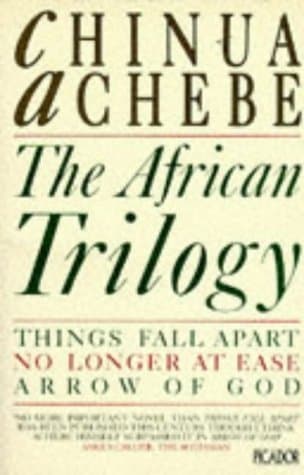
The African Trilogy: Things Fall Apart, No Longer at Ease, Arrow of God
Chinua Achebe
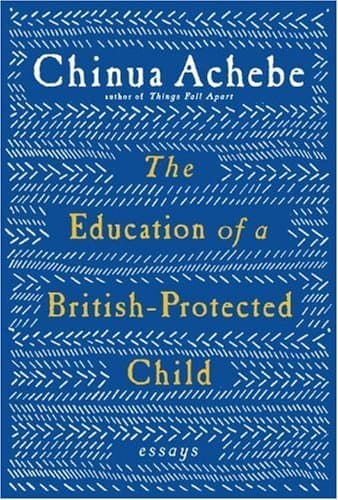
The Education of a British-Protected Child: Essays
Chinua Achebe
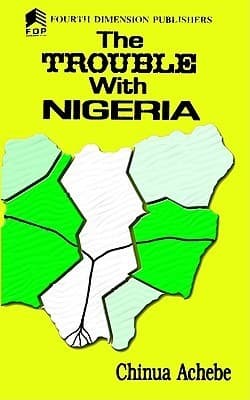
The Trouble with Nigeria
Chinua Achebe
The voter
Chinua Achebe

There Was a Country: A Personal History of Biafra
Chinua Achebe
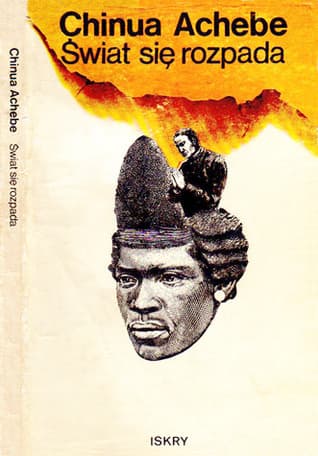
Świat się rozpada
Chinua Achebe