
Strange Tale of Panorama Island
autor Edogawa Rampo
O tej książce
Edogawa Ranpo (1894-1965) was a great admirer of Edgar Allan Poe and like Poe drew on his penchant for the grotesque and the bizarre to explore the boundaries of conventional thought. Best known as the founder of the modern Japanese detective novel, Ranpo wrote for a youthful audience, and a taste for playacting and theatre animates his stories. His writing is often associated with the era of ero guro nansense (erotic grotesque nonsense), which accompanied the rise of mass culture and mass media in urban Japan in the 1920s. Characterized by an almost lurid fascination with simulacra and illusion, the era’s sensibility permeates Ranpo's first major work and one of his finest achievements, Strange Tale of Panorama Island (Panoramato kidan), published in 1926.Ranpo’s panorama island is filled with cleverly designed optical illusions: a staircase rises into the sky; white feathered “birds” speak in women’s voices and offer to serve as vehicles; clusters of naked men and women romp on slopes carpeted with rainbow-colored flowers. His fantastical utopia is filled with entrancing music and strange sweet odors, and nothing is ordinary, predictable, or boring. The novella reflected the new culture of mechanically produced simulated realities (movies, photographs, advertisements, stereoscopic and panoramic images) and focused on themes of the doppelganger and appropriated identities: its main character steals the identity of an acquaintance. The novella’s utopian vision, argues translator Elaine Gerbert, mirrors the expansionist dreams that fed Japan's colonization of the Asian continent, its ending an eerie harbinger of the collapse of those dreams.Today just as a new generation of technologies is transforming the way we think—and becoming ever more invasive and pervasive—Ranpo's work is attracting a new generation of readers. In the past few decades his writing has inspired films, anime, plays, and manga, and many translations of his stories, essays, and novels have appeared, but to date no English-language translation of Panoramato kidan has been available. This volume, which includes a critical introduction and notes, fills that gap and uncovers for English-language readers an important new dimension of an ever stimulating, provocative talent.
Gdzie kupić
Brak dostępnych opcji zakupu.
Linki w tej sekcji są linkami afiliacyjnymi - jeśli po kliknięciu kupisz książkę, otrzymamy prowizję od sklepu. Cena dla Ciebie pozostaje taka sama.
Więcej od Edogawa Rampo
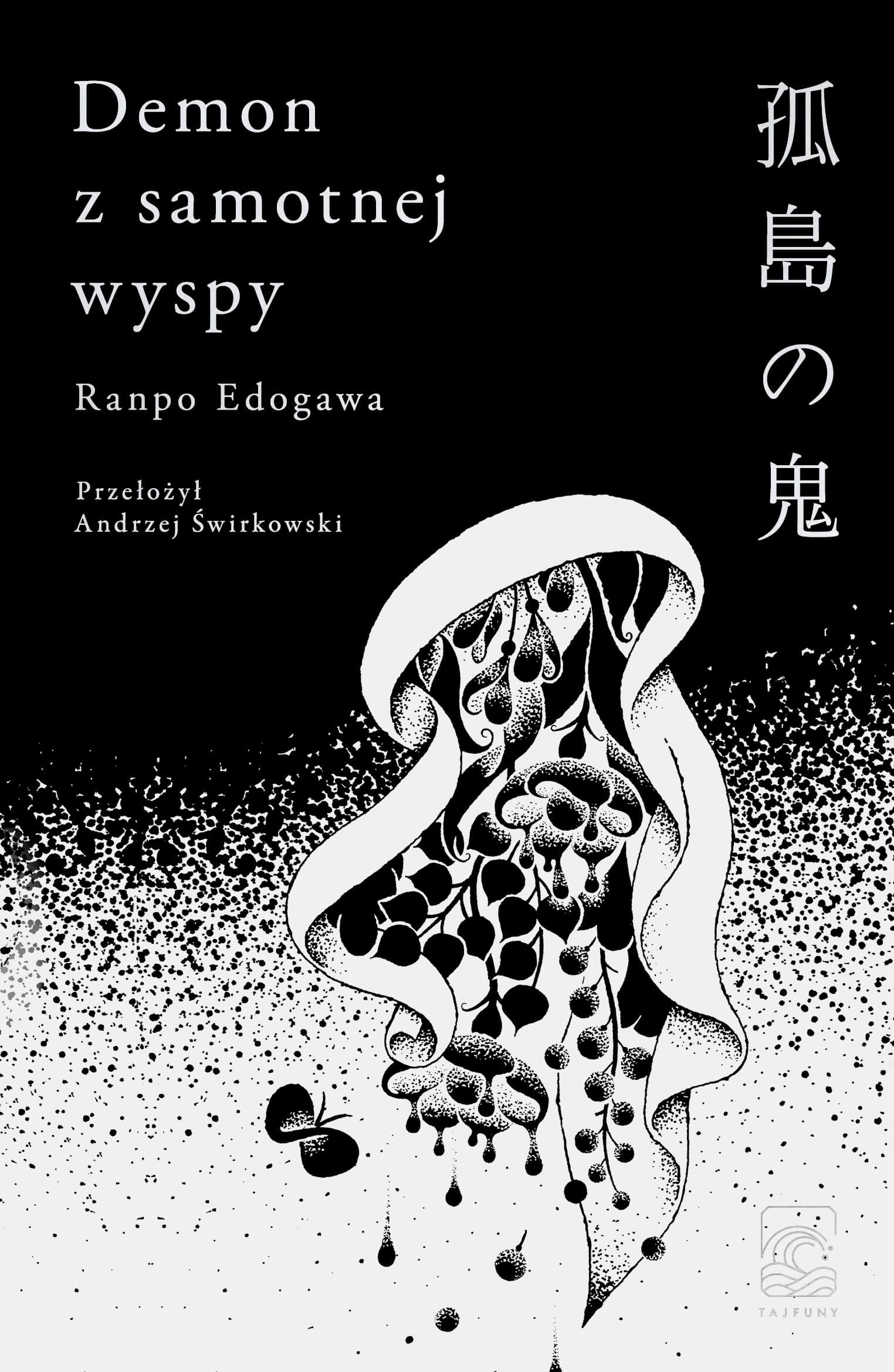
Demon z samotnej wyspy
Edogawa Rampo

Gold Mask
Mike Dubisch, Edogawa Rampo

Japanese Tales of Mystery & Imagination
Edogawa Rampo
Knakketiknakk
Haruki Murakami, Jun'ichirō Tanizaki, Yasunari Kawabata, Yukio Mishima, Yūko Tsushima, Yasutaka Tsutsui, Masuji Ibuse, Osamu Dazai, Naoya Shiga, Fumiko Hayashi, Taiko Hirabayashi, Ōgai Mori, Natsume Sōseki, Tamiki Hara, Kyōko Hayashi, Kenji Miyazawa, Kenzaburō Ōe, Hiromi Kawakami, Hitomi Kanehara, Taeko Kōno, Doppo Kunikida, Mieko Kawakami, Shūsaku Endō, Yōko Tawada, Takiji Kobayashi, Mieko Kanai, Ichiyō Higuchi, Minako Oba, Motojirō Kajii, Hiromi Itō, Edogawa Rampo, Yū Miri, Shigeharu Nakano, Ryonsuke Akutagawa, Tore Holberg

Moju: The Blind Beast
Edogawa Rampo

The Early Cases of Akechi Kogoro
Edogawa Rampo

The Fiend with Twenty Faces
Edogawa Rampo

The Human Chair
Edogawa Rampo
ฆาตกรรมบนเนิน D
Edogawa Rampo