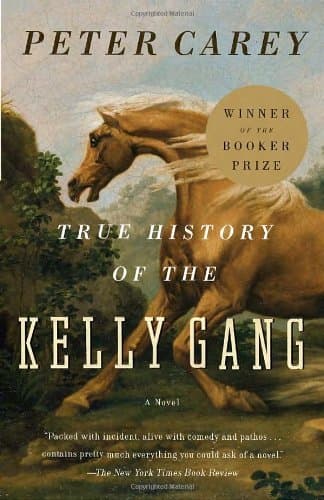
Prawdziwa historia Neda Kelly’ego
autor Peter Carey
O tej książce
"What is it about we Australians, eh?" demands a schoolteacher near the end of Peter Carey's True History of the Kelly Gang. "Do we not have a Jefferson? A Disraeli? Might not we find someone better to admire than a horse-thief and a murderer?" It's the author's sole nod to the contradictory feelings Ned Kelly continues to evoke today, more than a century after his death. A psychopathic killer to some, a crusading folk hero to others, Kelly was a sharpshooting outlaw who eluded a brutal police manhunt for nearly two years. For better or worse, he's now a part of the Australian national myth. Indeed, the opening ceremonies for the Sydney Olympics featured an army of Ned Kellys dancing about to Irish music, which puts him in the symbolic company of both kangaroos and Olivia Newton-John. What's to be gained from telling this illiterate bushranger's story yet again? Quite a lot, as it turns out. For starters, there is the remarkable vernacular poetry of Carey's narrative voice. Fierce, funny, ungrammatical, steeped in Irish legends and the frontier's moral code, this voice is the novel's great achievement--and perhaps the greatest in Carey's distinguished career. It paints a vivid picture of an Australia where English landowners skim off the country's best territory while government land grants allow the settlers just enough acreage to starve. Cheated, lied to, and persecuted by the authorities at every opportunity, young Kelly retains no faith in his colonial masters. What he does trust, oddly, is the power of words: And here is the thing about them men they was Australians they knew full well the terror of the unyielding law the historic memory of UNFAIRNESS were in their blood and a man might be a bank clerk or an overseer he might never have been lagged for nothing but still he knew in his heart what it were to be forced to wear the white hood in prison he knew what it were to be lashed for looking a warder in the eye ... so the knowledge of unfairness were deep in his bone and in his marrow. Ned Kelly as literary hero? Strangely enough, that's what he becomes, at least in Carey's rendering. Pouring his heart out in a series of letters to the country at large, Kelly wants nothing more than to be heard--and for the dirt-poor son of an Irish convict, that's an audacious ambition indeed. It's not so surprising, then, that his story continues to speak to Australians. Like all colonial countries, Australia was built at a steep human price, and the memory of all those silenced voices lives on. True History of the Kelly Gang takes its epigraph from Faulkner: "The past is not dead. It is not even past." And like Faulkner's own vast chronicle of dispossession, it's haunted by tragedies as large as history itself. --Mary Park
Gdzie kupić
Brak dostępnych opcji zakupu.
Linki w tej sekcji są linkami afiliacyjnymi - jeśli po kliknięciu kupisz książkę, otrzymamy prowizję od sklepu. Cena dla Ciebie pozostaje taka sama.
Więcej od Peter Carey

30 Days in Sydney: A Wildly Distorted Account
Peter Carey
A Long Way From Home
Peter Carey
Amnesia
Peter Carey
Bliss
Peter Carey

Collected Stories
Peter Carey
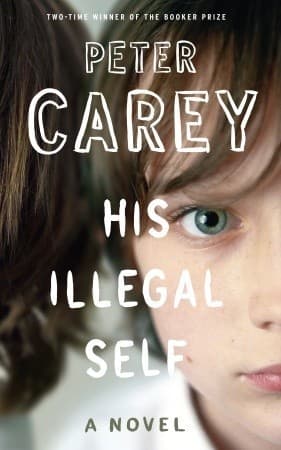
His Illegal Self
Peter Carey
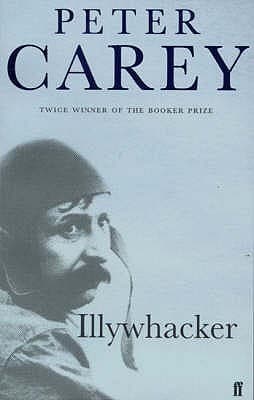
Illywhacker
Peter Carey
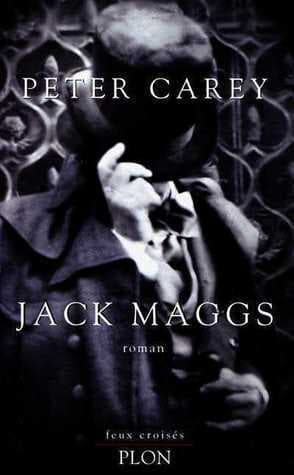
Jack Maggs
Peter Carey
Historia pewnej mistyfikacji
Peter Carey
Oskar i Lucynda
Peter Carey
Parrot i Olivier w Ameryce
Peter Carey
The Big Bazoohley
Peter Carey
Chemia łez
Peter Carey
The Fat Man in History
Peter Carey

The Paris Review Interviews, II: Wisdom from the World's Literary Masters
Gabriel García Márquez, Stephen King, Alice Munro, Eudora Welty, William Faulkner, Isaac Bashevis Singer, James Thurber, Graham Greene, Toni Morrison, Harold Bloom, The Paris Review, Robert Lowell, William Gaddis, Peter Carey, Philip Larkin
The Tax Inspector
Peter Carey
The Unusual Life of Tristan Smith
Peter Carey
Złodziejstwo, czyli historia miłosna
Peter Carey
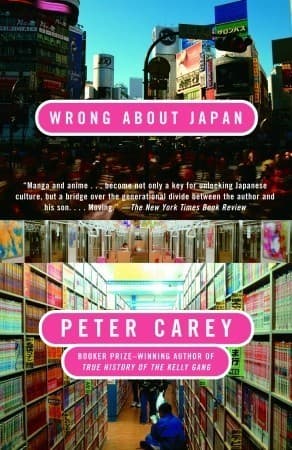
Wrong About Japan
Peter Carey