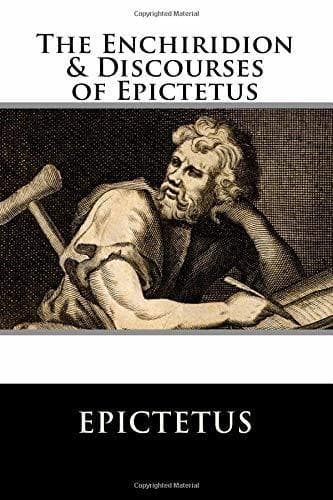
The Enchiridion & Discourses of Epictetus
autor Epictetus
O tej książce
This collection has four preserved volumes of The Discourses and The Enchiridion by Epictetus and a detailed biography of the book's author. About the Author: In light of modern research and knowledge gained by deciphering of the Greek anecdotes of ancient times, the date of birth of Epictetus is estimated to be around 55 A.D. His place of birth is contemplated as Hierapolis, Phrygia (now a part of Turkey). The birth name of Epictetus is still unknown and his known name "Epictetus" simply means "acquired" in Greek. Possibly this name was christened or rechristened upon him by his master Epaphroditos. Epaphroditos was a wealthy freedman and a secretary to Nero (Nero Claudius Caesar Augustus Germanicus was a Roman Emperor between 54–68 A.D.; Nero was an infamous emperor who according to the Greek people was responsible for lighting the Great Fire of Rome in 18 July to 19 July 64 A.D. He committed suicide in 68 A.D. to escape assassination). His Interest in Philosophy and His Freedom: In the early phases of his life, Epictetus acquired great interest/passion in philosophy, and with the permission of his affluent master he studied Stoic philosophy under the guidance of Musonius Rufus. This allowed him to gain education and respect in society. After the death of Nero in 64 A.D., he acquired his freedom and started teaching Stoic philosophy in Rome. His School in Nicopolis, Epirus: When Domitian came to power and become Emperor of Rome in 93 A.D., he banished all philosophers from the city. Domitian was a believer in Jupiter and emphasized on enhanced connections with it and patronized its priests and temples at Capitoline Hill. He was great devotee of the goddess Minerva. When Domitian banished philosophers from Rome, Epictetus ran to Nicopolis, Epirus, and laid base of his school of thought/philosophy. His Discourses and the Enchiridion: His most famous pupil Arrian of Nicomedia, who was a historian, military commander, public servant and philosopher of the 2nd century, studied under him in his youth and claimed to have written his famous Discourses. Arrian describes his teacher Epictetus as a powerful and magnetic speaker who had the ability to make the listeners feel anything that he desired. He tells that many eminent figures of that time often sought conversation with Epictetus. He further exclaims that Roman emperor Hadrian had friendly relationships with Epictetus. It is noteworthy that Hadrian was a successor of Domitian.
Gdzie kupić
Brak dostępnych opcji zakupu.
Linki w tej sekcji są linkami afiliacyjnymi - jeśli po kliknięciu kupisz książkę, otrzymamy prowizję od sklepu. Cena dla Ciebie pozostaje taka sama.
Więcej od Epictetus
Diatryby. Encheiridion z dodaniem Fragmentów oraz Gnomologium Epiktetowego
Epictetus

Discourses, Books 3-4. The Enchiridion
Epictetus
Düşünceler ve Sohbetler
Epictetus

Meditations of Marcus Aurelius and Epictetus' Enchiridion
Marcus Aurelius, Epictetus
Of Human Freedom
Epictetus

Stoic Six Pack (Illustrated): Meditations of Marcus Aurelius, Golden Sayings, Fragments and Discourses of Epictetus, Letters from a Stoic and The Enchiridion
Epictetus, Seneca, Marcus Aurelius
Encheiridion
Epictetus, Sharon Lebell

The Complete Harvard Classics - ALL 71 Volumes: The Five Foot Shelf & The Shelf of Fiction: The Famous Anthology of the Greatest Works of World Literature
Honoré de Balzac, George Sand, Mark Twain, Jane Austen, Nathaniel Hawthorne, John Dryden, Percy Bysshe Shelley, Euripides, Theodor Storm, Thomas Hobbes, Sophocles, Blaise Pascal, Ben Jonson, Laurence Sterne, Thomas Carlyle, Francis Bacon, William Makepeace Thackeray, John Milton, James Russell Lowell, Henry James, Plato, John Fletcher, Edward Everett Hale, Bret Harte, Guy de Maupassant, Washington Irving, René Descartes, John Webster, Theodor Fontane, Jonathan Swift, Sydney Smith, Thomas de Quincey, Alessandro Manzoni, Alfred de Musset, Gotthold Ephraim Lessing, William Shakespeare, Walter Scott, Charles Darwin, Marcus Aurelius, Juan Valera, Christopher Marlowe, Benvenuto Cellini, Adam Smith, Martin Luther, Philip Sidney, Henry Fielding, Thomas Dekker, Thomas Malory, Marcus Tullius Cicero, Epictetus, John Bunyan, Oliver Goldsmith, Francis Beaumont, Gottfried Keller, Philip Massinger, Abraham Cowley, Joseph Lister, Walter Raleigh, William Harvey, Jean Froissart, Thomas à Kempis, William Penn, Ambroise Paré, William Allan Neilson, Louis Pasteur, Francis Drake, Tacitus, Miguel de Cervantes Saavedra, Fyodor Dostoevsky, Charles William Eliot, Ernest Renan, Aeschylus, Hans Christian Andersen, Aesop, Charles Lamb, Ivan Turgenev, John Woolman, Simon Newcomb, Augustine of Hippo, John Ruskin, Immanuel Kant, Lord Byron, John Locke, Homer, Richard Steele, David Garrick, Walter Bigges, Samuel Johnson, Thomas Babington Macaulay, Edward Haies, Voltaire, Michel de Montaigne, Thomas Browne, Robert Burns, George Eliot, Aristophanes, Daniel Defoe, Edmund Burke, Alphonse Daudet, Leigh Hunt, Charles-Augustin Sainte-Beuve, Michael Faraday, Hermann von Helmholtz, Pliny the Younger, Friedrich Schiller, Wilhelm Grimm, Herodotus, Jean-Jacques Rousseau, Samuel Taylor Coleridge, Giuseppe Mazzini, Victor Hugo, Richard Brinsley Sheridan, Richard Henry Dana Jr., William Henry Harrison, Dante Alighieri, Izaak Walton, Johann Wolfgang von Goethe, John Stuart Mill, George Berkeley, Leo Tolstoy, Bjørnstjerne Bjørnson, Alexander L. Kielland, Edgar Allan Poe, Benjamin Franklin, Philip Nichols, Archibald Geikie, Thomas More, Robert Louis Stevenson, Oliver Wendell Holmes Sr., Pierre Corneille, Francis Pretty, Jacob Grimm, Virgil, Ralph Waldo Emerson, Niccolò Machiavelli, Plutarch, Pedro Calderón de la Barca, Charles Dickens, Henry David Thoreau, Molière, Hippocrates, Jean Racine, Robert Browning, Joseph Addison, William Roper
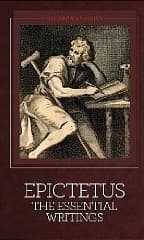
The Essential Writings
Epictetus
The Golden Sayings of Epictetus
Epictetus

The Harvard Classics, Volume 2: The Apology, Phaedo and Crito of Plato, the Golden sayings of Epictetus, the Meditations of Marcus Aurelius
Marcus Aurelius, Charles William Eliot, Plato, Epictetus