
Parting Ways: Jewishness and the Critique of Zionism
autor Judith Butler
O tej książce
Judith Butler follows Edward Said’s late suggestion that through a consideration of Palestinian dispossession in relation to Jewish diasporic traditions a new ethos can be forged for a one-state solution. Butler engages Jewish philosophical positions to articulate a critique of political Zionism and its practices of illegitimate state violence, nationalism, and state-sponsored racism. At the same time, she moves beyond communitarian frameworks, including Jewish ones, that fail to arrive at a radical democratic notion of political cohabitation. Butler engages thinkers such as Edward Said, Emmanuel Levinas, Hannah Arendt, Primo Levi, Martin Buber, Walter Benjamin, and Mahmoud Darwish as she articulates a new political ethic. In her view, it is as important to dispute Israel’s claim to represent the Jewish people as it is to show that a narrowly Jewish framework cannot suffice as a basis for an ultimate critique of Zionism. She promotes an ethical position in which the obligations of cohabitation do not derive from cultural sameness but from the unchosen character of social plurality. Recovering the arguments of Jewish thinkers who offered criticisms of Zionism or whose work could be used for such a purpose, Butler disputes the specific charge of anti-Semitic self-hatred often leveled against Jewish critiques of Israel. Her political ethic relies on a vision of cohabitation that thinks anew about binationalism and exposes the limits of a communitarian framework to overcome the colonial legacy of Zionism. Her own engagements with Edward Said and Mahmoud Darwish form an important point of departure and conclusion for her engagement with some key forms of thought derived in part from Jewish resources, but always in relation to the non-Jew.Butler considers the rights of the dispossessed, the necessity of plural cohabitation, and the dangers of arbitrary state violence, showing how they can be extended to a critique of Zionism, even when that is not their explicit aim. She revisits and affirms Edward Said’s late proposals for a one-state solution within the ethos of binationalism. Butler’s startling suggestion: Jewish ethics not only demand a critique of Zionism, but must transcend its exclusive Jewishness in order to realize the ethical and political ideals of living together in radical democracy.
Gdzie kupić
Brak dostępnych opcji zakupu.
Linki w tej sekcji są linkami afiliacyjnymi - jeśli po kliknięciu kupisz książkę, otrzymamy prowizję od sklepu. Cena dla Ciebie pozostaje taka sama.
Więcej od Judith Butler

Żądanie Antygony. Rodzina między życiem a śmiercią
Judith Butler

Bodies That Matter: On the Discursive Limits of "Sex"
Judith Butler

Contingency, Hegemony, Universality: Contemporary Dialogues on the Left
Slavoj Žižek, Judith Butler, Ernesto Laclau

Dispossession: The Performative in the Political
Judith Butler, Athena Athanasiou

Walczące słowa. Mowa nienawiści i polityka performatywu
Judith Butler

Ramy wojny. Kiedy życie godne jest opłakiwania?
Judith Butler

Uwikłani w płeć
Judith Butler

Giving an Account of Oneself
Judith Butler

Is Critique Secular?: Blasphemy, Injury, and Free Speech
Judith Butler, Saba Mahmood, Talal Asad

Zapiski o performatywnej teorii zgromadzenia
Judith Butler

Precarious Life: The Powers of Mourning and Violence
Judith Butler

Senses of the Subject
Judith Butler
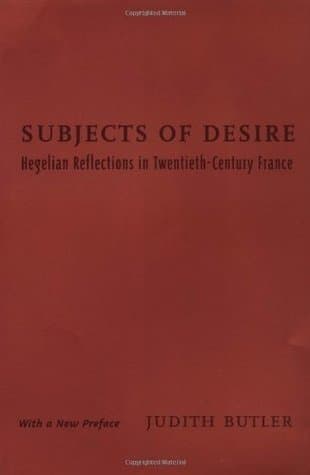
Subjects of Desire: Hegelian Reflections in Twentieth-Century France
Judith Butler

The Force of Nonviolence: The Ethical in the Political
Judith Butler

The Judith Butler Reader
Judith Butler
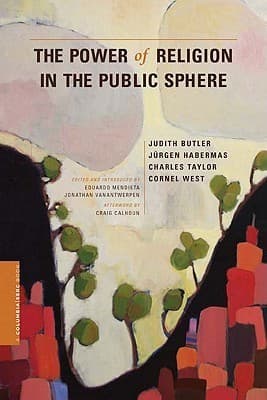
The Power of Religion in the Public Sphere
Cornel West, Jürgen Habermas, Judith Butler, Charles Margrave Taylor, Craig J. Calhoun

The Psychic Life of Power: Theories in Subjection
Judith Butler

Undoing Gender
Judith Butler

What World Is This?: A Pandemic Phenomenology
Judith Butler