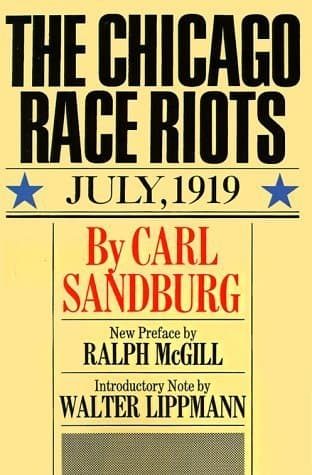
The Chicago Race Riots, July 1919
autor Carl Sandburg
O tej książce
a selection from the beginning of the first chapter The so-called race riots in Chicago during the last week of July, 1919, started on a Sunday at a bathing beach. A colored boy swam across an imaginary segregation line. White boys threw rocks at him and knocked him off a raft. He was drowned. Colored people rushed to a policeman and asked for the arrest of the boys throwing stones. The policeman refused. As the dead body of the drowned boy was being handled, more rocks were thrown, on both sides. The policeman held on to his refusal to make arrests. Fighting then began that spread to all the borders of the Black Belt. The score at the end of three days was recorded as twenty negroes dead, fourteen white men dead, and a number of negro houses burned. The riots furnished an excuse for every element of Gangland to go to it and test their prowess by the most ancient ordeals of the jungle. There was one section of the city that supplied more white hoodlums than any. other section. It was the district around the stockyards and packing houses. I asked Maclay Hoyne, states attorney of Cook County, "Does it seem to you that you get more tough birds from out around the stockyards than anywhere else in Chicago?" And he answered that more bank robbers, payroll bandits, automobile bandits, highwaymen and strong-arm crooks come from this particular district than any other that has come to his notice during seven years of service as chief prosecuting official. And I recalled that a few years ago a group of people from the University of Chicago came over into the stockyards district and made a survey. They went into one neighborhood and asked at every house about how the people lived-and died. They found that seven times as many white hearses haul babies along the streets here as over in the lake shore district a mile east. Their statement of scientific fact was that the infant mortality was seven times higher here proportionately, than a mile to the east in a district where housing and wages are different. So on the one hand we have blind lawless government failing to function through policemen ignorant of Lincoln, the Civil War, the Emancipation Proclamation, and a theory sanctioned and baptized in a storm of red blood. And on the other hand we have a gaunt involuntary poverty from which issues the hoodlum. At least three conditions marked the events of violence in Chicago in July, 1919, and gave the situation a character essentially different from the backgrounds of other riots. Here are factors that give the Chicago flare-up historic 1. The Black Belt population of 50,000 in Chicago was more than doubled during the war. No new houses or tenements were built. Under pressure of war industry the district, already notoriously overcrowded and swarming with slums, was compelled to have and hold in its human dwelling apparatus more than twice as many people as it held before the war. 2. The Black Belt of Chicago is probably the strongest effective unit of political power, good or bad, in America. It connects directly with a city administration decisive in its refusal to draw the color line, and a mayor whose opponents failed to defeat him with the covert circulation of the epithet of "nigger lover." To such a community the black doughboys came back from France and the cantonment camps. Also it is known that hundreds-it may be thousands-have located in Chicago in the hope of permanent jobs and homes in preference to returning south of Mason and Dixon's line, where neither a world war for democracy, nor the Croix de Guerre, nor three gold chevrons, nor any number of wound stripes, assures them of the right to vote or to have their votes counted or to participate responsibly in the elective determinations of the American republic. 3. Thousands of white men and thousands of...
Gdzie kupić
Brak dostępnych opcji zakupu.
Linki w tej sekcji są linkami afiliacyjnymi - jeśli po kliknięciu kupisz książkę, otrzymamy prowizję od sklepu. Cena dla Ciebie pozostaje taka sama.
Więcej od Carl Sandburg
Abe Lincoln Grows Up
Carl Sandburg, James Daugherty
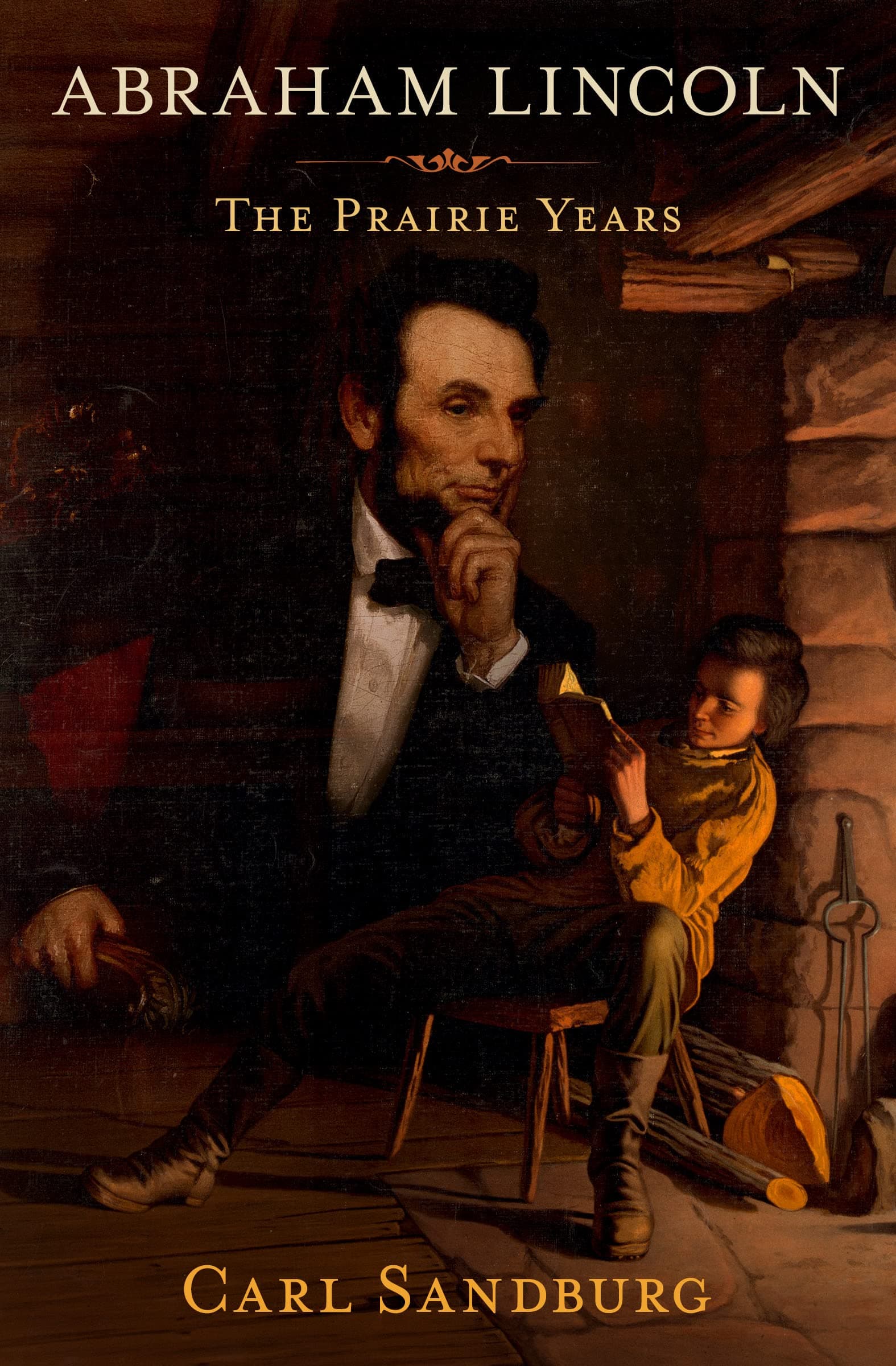
Abraham Lincoln: The Prairie Years
Carl Sandburg
Abraham Lincoln: The Prairie Years and the War Years
Carl Sandburg
Abraham Lincoln: The Prairie Years, Vol 1
Carl Sandburg
Abraham Lincoln: The War Years, Vol 2
Carl Sandburg
Carl Sandburg
Carl Sandburg, Steven Arcella
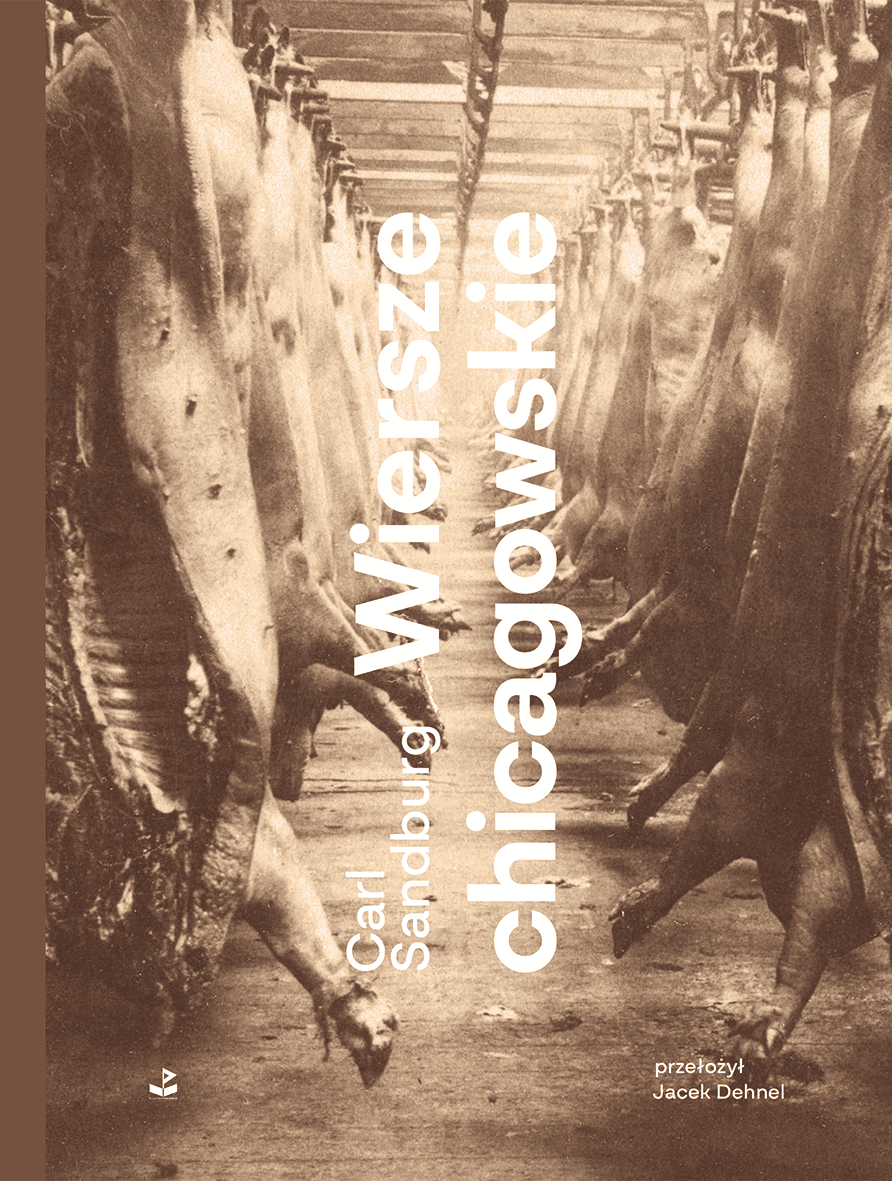
Wiersze chicagowskie
Carl Sandburg
Cornhuskers
Carl Sandburg

Good Poems for Hard Times
Raymond Carver, Patricia Hampl, Billy Collins, Herman Melville, Garrison Keillor, Henry Wadsworth Longfellow, Hilaire Belloc, Hayden Carruth, Emily Dickinson, Robert Frost, Wendell Berry, Stephen Dunn, E.E. Cummings, Galway Kinnell, John Keats, Charles Bukowski, William Blake, Stephen Dobyns, Rita Dove, Thomas Hardy, Carl Sandburg, Jim Harrison, Mary Oliver, Lawrence Ferlinghetti, W.S. Merwin, Edna St. Vincent Millay, Grace Paley, Elizabeth Bishop, Jennifer Michael Hecht, X.J. Kennedy, Sharon Olds, Donald Hall, Robert Burns, John Donne, Maxine Kumin, John Berryman, Noël Coward, Carl Dennis, Kenneth Rexroth, Jane Kenyon, Howard Nemerov, Lawrence Raab, David Ignatow, W.H. Auden, Fleur Adcock, Kate Light, Louis MacNeice, Philip Booth, Erica Funkhouser, Virginia Hamilton Adair, Liesl Mueller
Harvest Poems: 1910-1960
Carl Sandburg
Honey And Salt: Seventy-Seven American Poems on Life, Love, Death, and Nature
Carl Sandburg
More Rootabaga Stories
Carl Sandburg, Miska Petersham
Rootabaga Stories
Carl Sandburg, Miska Petersham, Maud Petersham
Selected Poems
Carl Sandburg

Storm Over the Land: A Profile of the Civil War
Carl Sandburg
The Complete Poems
Carl Sandburg
The Family of Man
Carl Sandburg
The Huckabuck Family: and How They Raised Popcorn in Nebraska and Quit and Came Back
Carl Sandburg, David Small
The People, Yes
Carl Sandburg